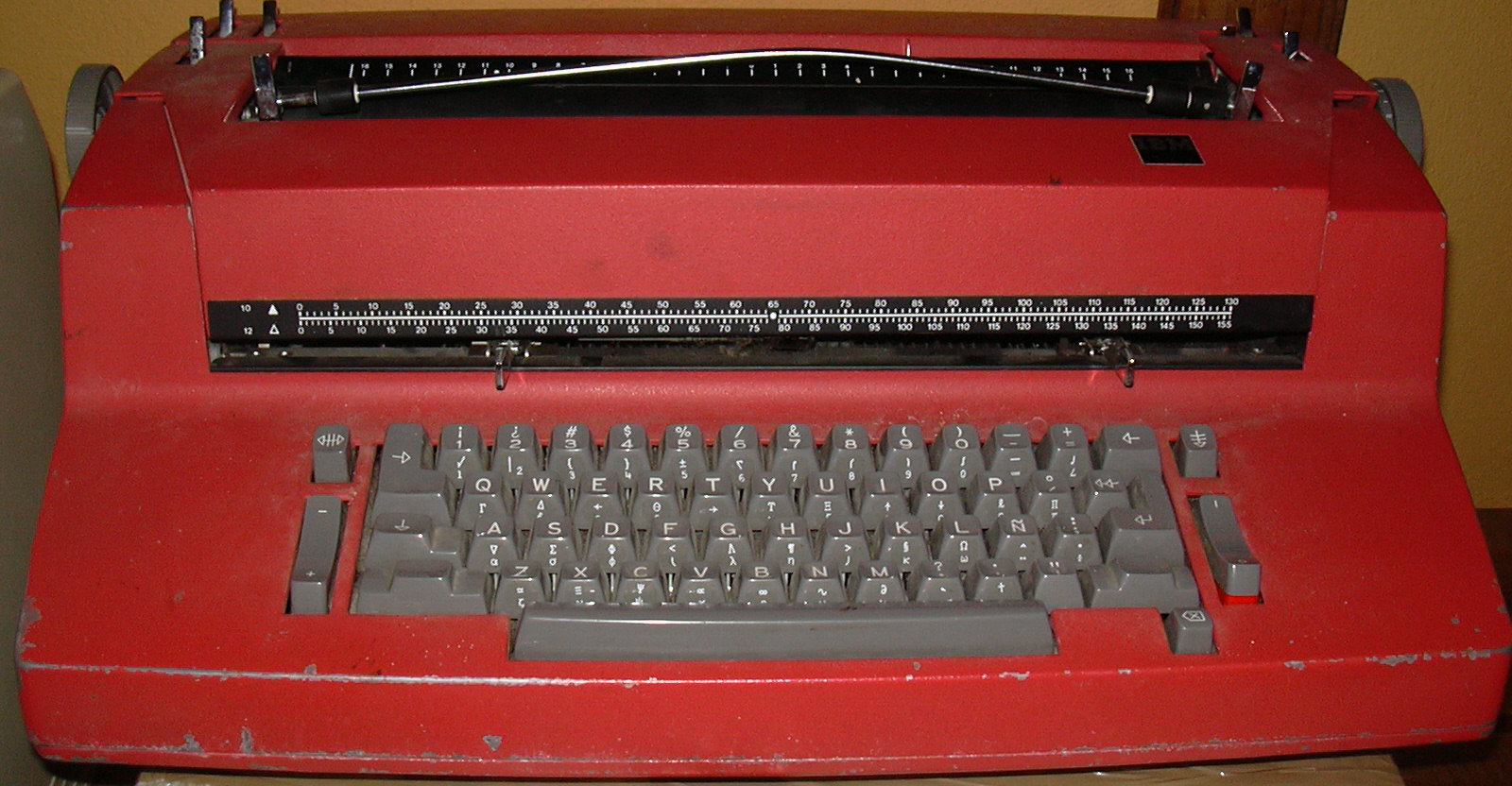
IBM Selectric II
Ficha técnica
Características
Máquina de escribir eléctrica
Curiosidades
En la serie Fringe (2x01) utilizan una Selectric 251 (inexistente) para comunicarse entre los dos mundos alternativos.

Máquina de escribir eléctrica
En la serie Fringe (2x01) utilizan una Selectric 251 (inexistente) para comunicarse entre los dos mundos alternativos.
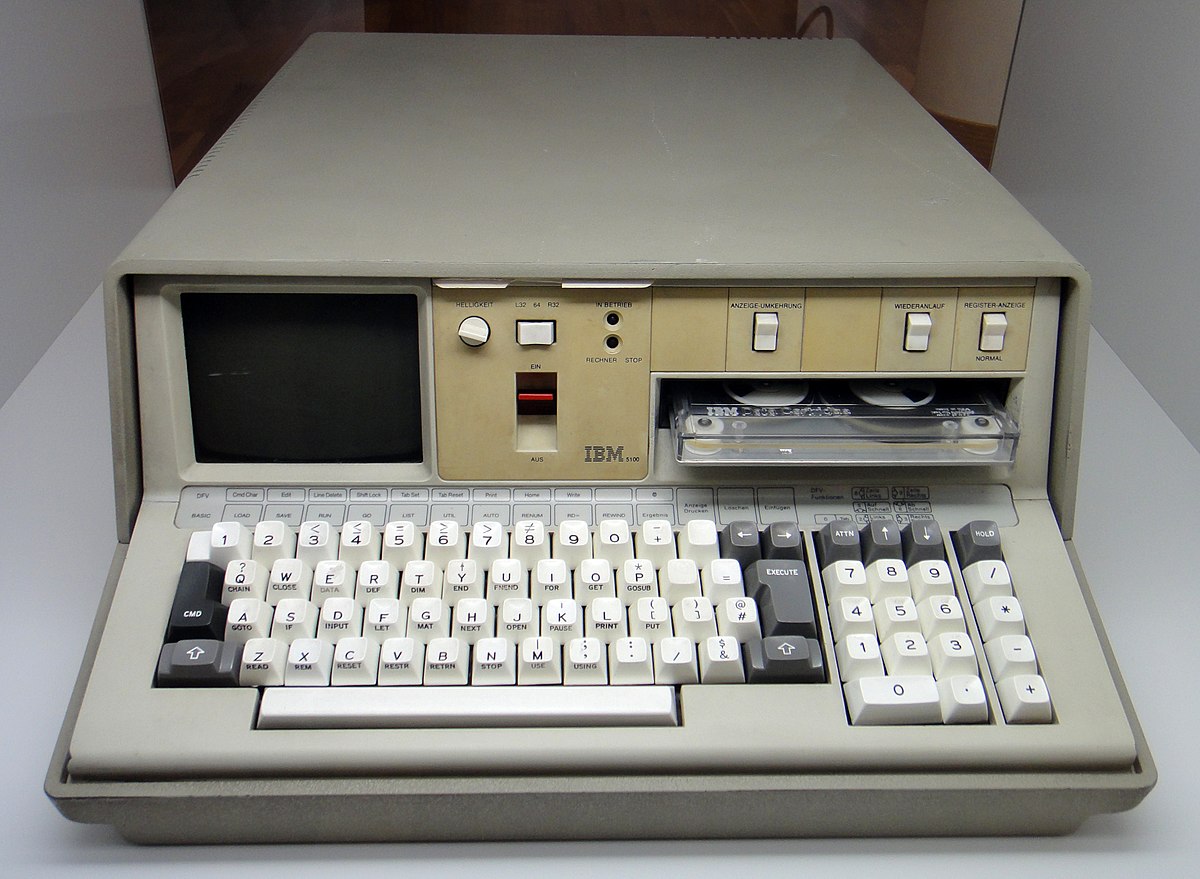
The Model 5100 is IBMs first minicomputer, i.e. not a mainframe, and is also considered one of the worlds first portable computers. It is preceded only by the Hewlett-Packard HP-9830A from 1973. Although at 55-pounds, the 5100 might best be described as self-contained rather than portable.
The Color Graphics Adapter (CGA), originally also called the Color/Graphics Adapter or IBM Color/Graphics Monitor Adapter, introduced in 1981, was IBMs first color graphics card for the IBM PC and established a de facto computer display standard.
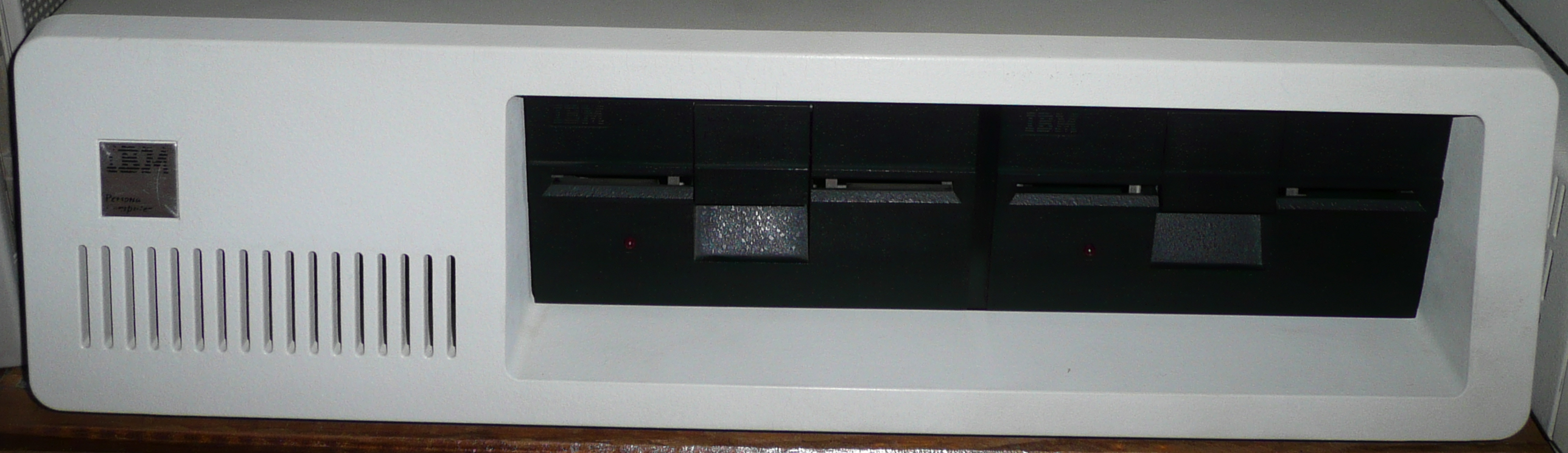
- Lenguajes   IBM BASIC (Special Microsoft BASIC-80 version in ROM)
Teclado   Full stroke clicky 83 Teclas with 10 function Teclas and numeric keypad
- CPU   Intel 8088
- Velocidad   4.77 MHz
- Co-procesador   Optional 8087 math coprocessor
- RAM   64 KB (The very first ones had only 16 KB)
- ROM   64 KB
- Modos de Texto   40 or 80 char x 25 lines
- Modo gráfico   Optional CGA Modo gráfico : 320 x 200  640 x 200
Colores   Monochrome  4 among 8 in 320 x 200 CGA mode
- Sonido   Tone Generator - built-in speaker
- Dimensiones  Peso   50.8 (W) x 40.6 (D) x 14 (H) cm
- IO PORTS   Five internal 8 bit ISA slots, monitor, Centronics, cassette (),
- Almacenamiento interno   One or two 160 KB 5.25 disk-drives
- OS   MS-DOS, CPM-86, USCD Pascal
- Fuente de alimentación   Built-in 63.5W switching Fuente de alimentación unit
- Perifericos   5 Slots de expansión, 5, 10, 20 MB hard discs
Precio   £1736 (1 FD, monochrome monitor, U.K., 1983)
The Monochrome Display Adapter (MDA, also MDA card, Monochrome Display and Printer Adapter, MDPA) is IBMs standard video display card and computer display standard for the IBM PC introduced in 1981. The MDA does not have any pixel-addressable graphics modes, only a single monochrome text mode which can display 80 columns by 25 lines of high resolution text characters or symbols useful for drawing forms.
The Hercules Graphics Card (HGC) is a computer graphics controller formerly made by Hercules Computer Technology, Inc. that combines IBMs text-only MDA display standard with a bitmapped graphics mode. This allows the HGC to offer both high-quality text and graphics from a single card. The HGC was very popular, and became a widely supported de facto display standard on IBM PC compatibles. The HGC standard was used long after more technically capable systems had entered the market, especially on dual-monitor setups.
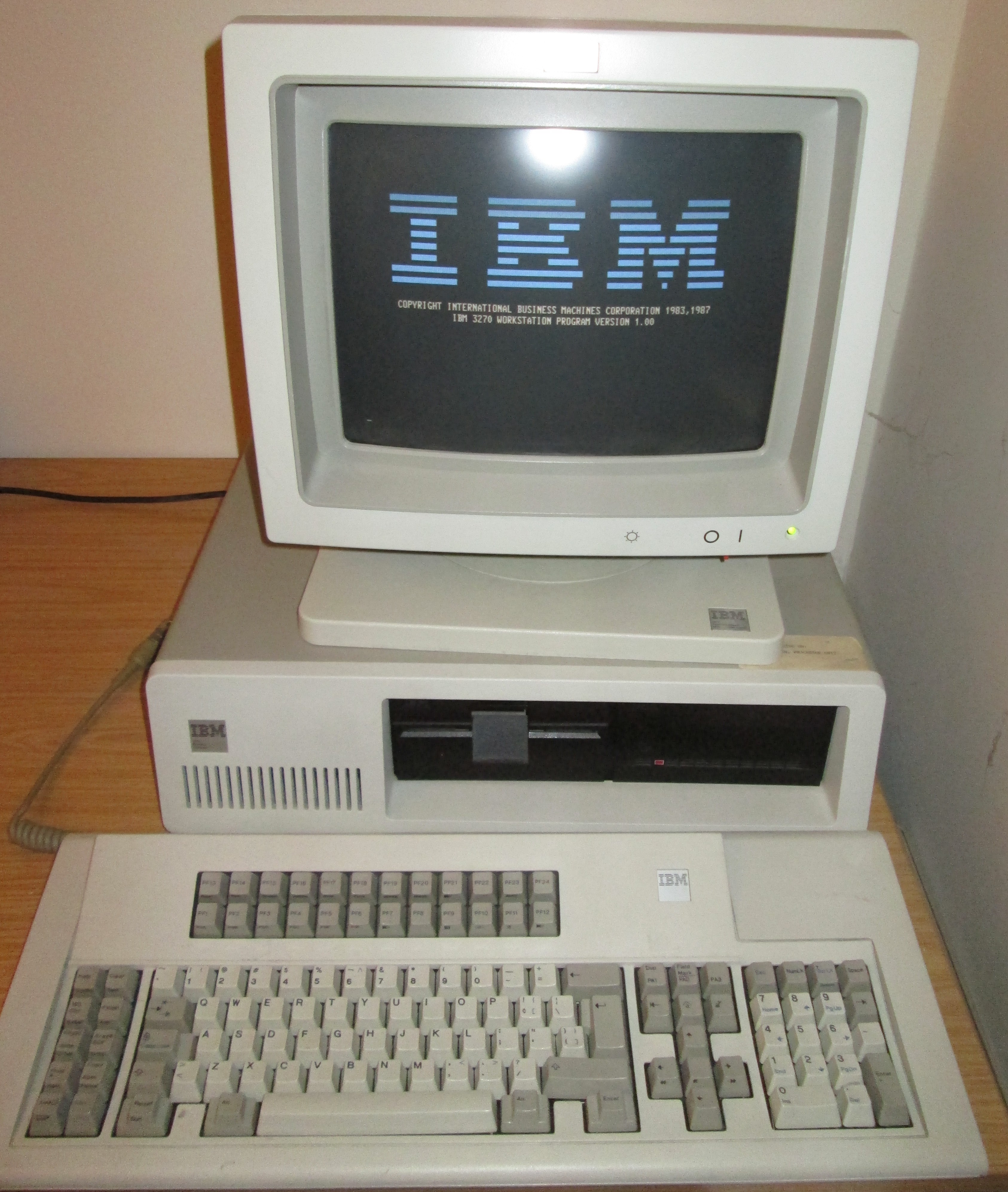
With 3270 terminal emulation, 20 function key keyboard
Modelo 5271
CPU 8088
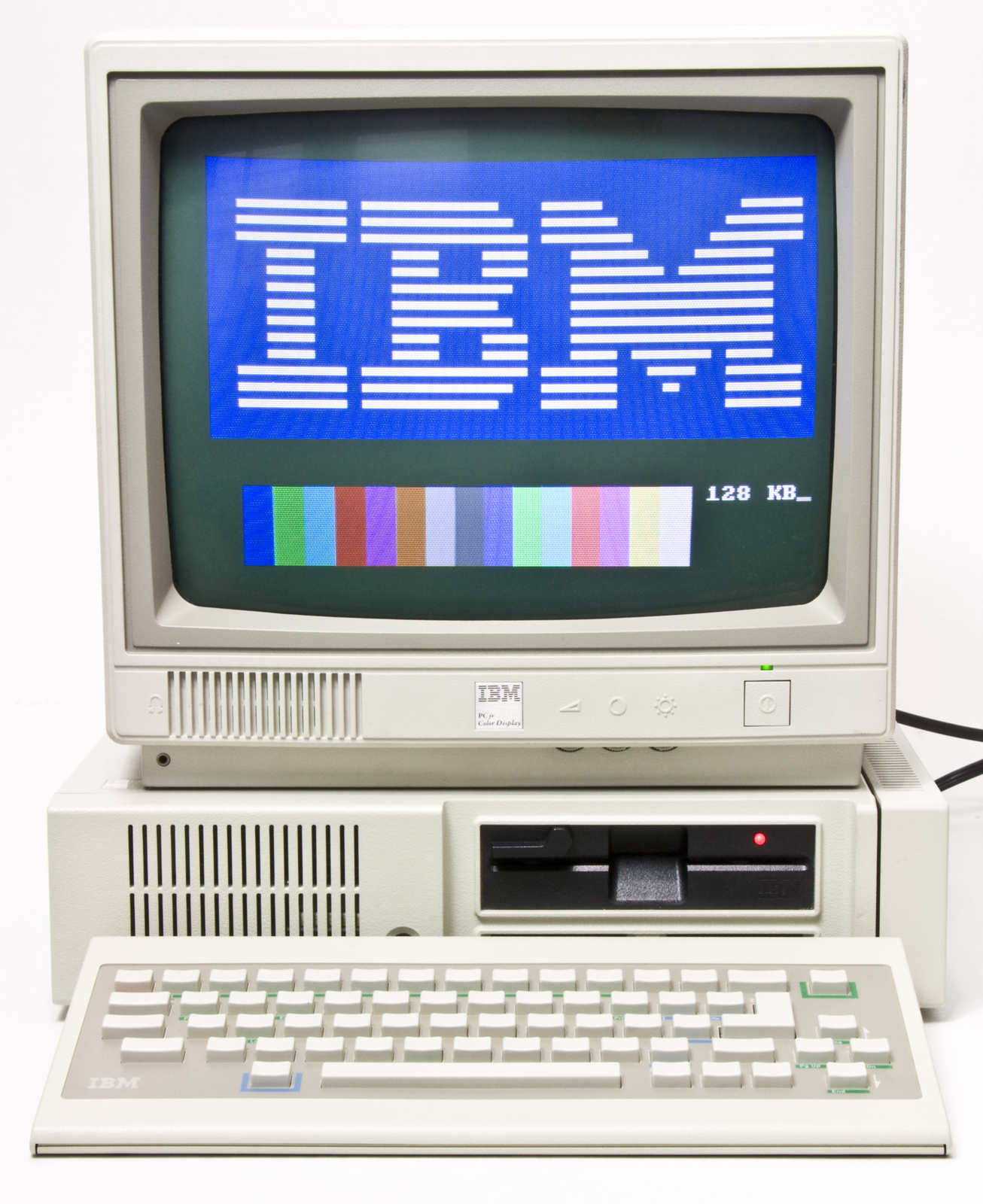
Floppy-based home computer, infrared keyboard
Modelo 4860
CPU 8088
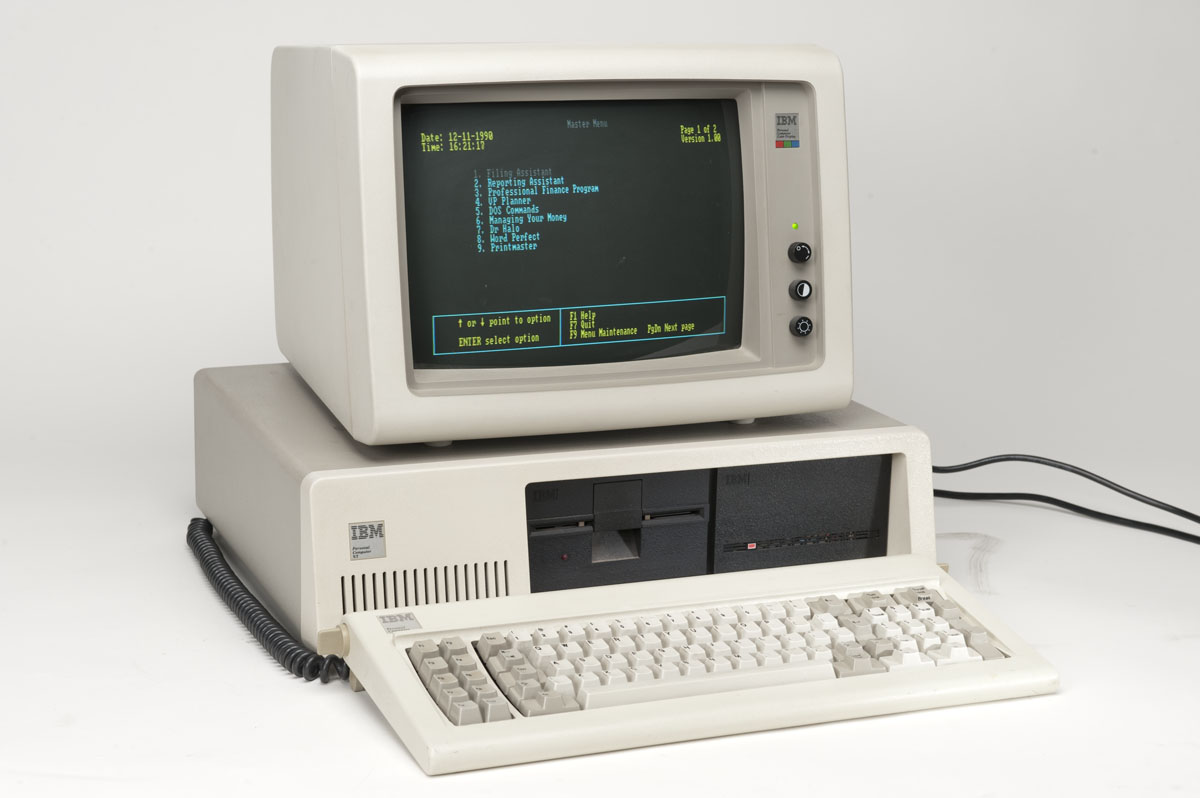
First IBM PC to come with an internal hard drive as standard.
Modelo 	5160
CPU 8088
The Enhanced Graphics Adapter (EGA) is an IBM PC graphics adapter and de facto computer display standard from 1984 that superseded the CGA standard introduced with the original IBM PC, and was itself superseded by the VGA standard in 1987. In addition to the original EGA card manufactured by IBM, many compatible third-party cards were manufactured, and EGA graphics modes continued to be supported by VGA and later standards.
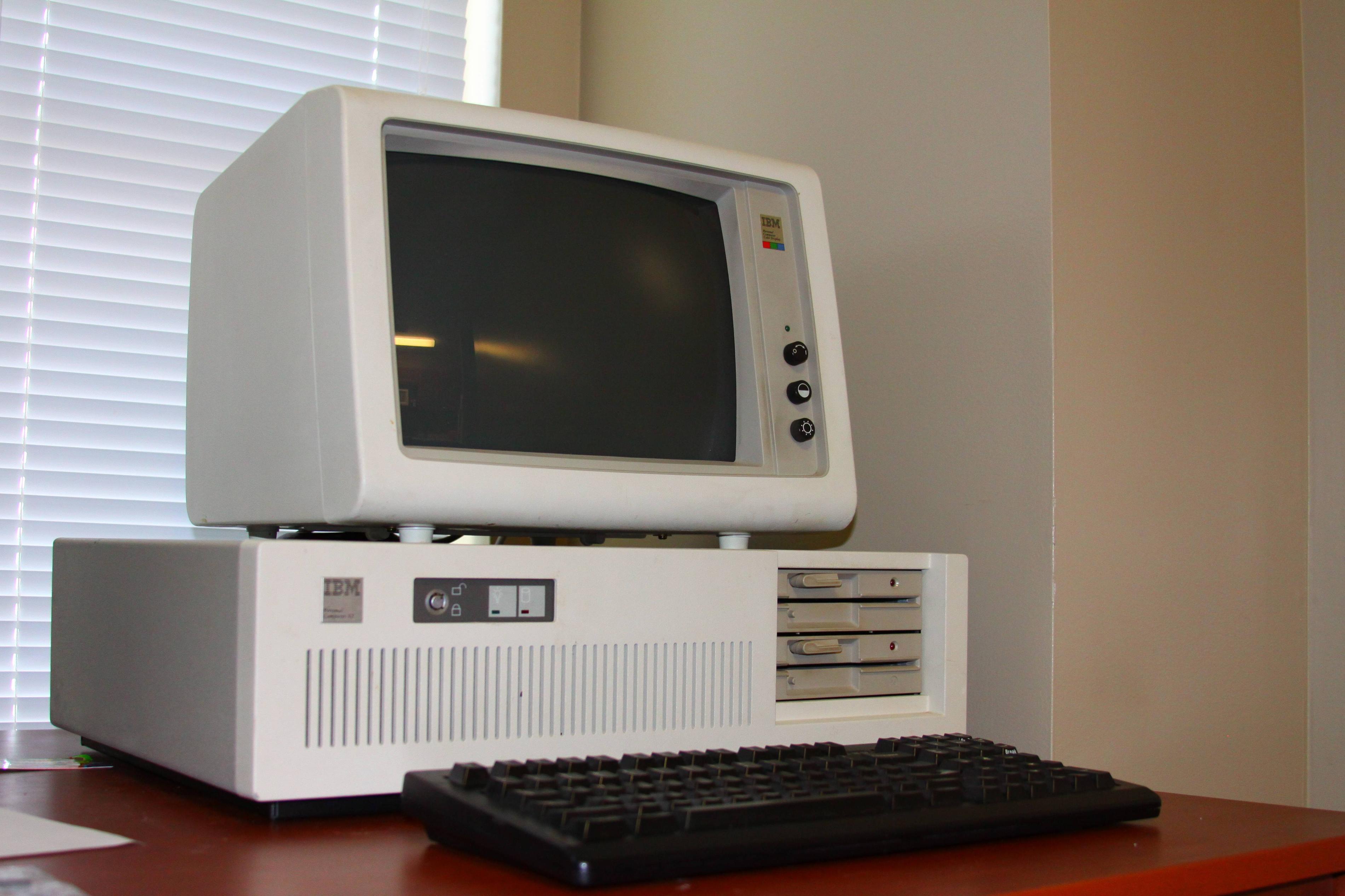
Faster processor, faster system bus (6 MHz, later 8 MHz, vs 4.77 MHz), jumperless configuration, real-time clock
Modelo 5170
CPU 8286
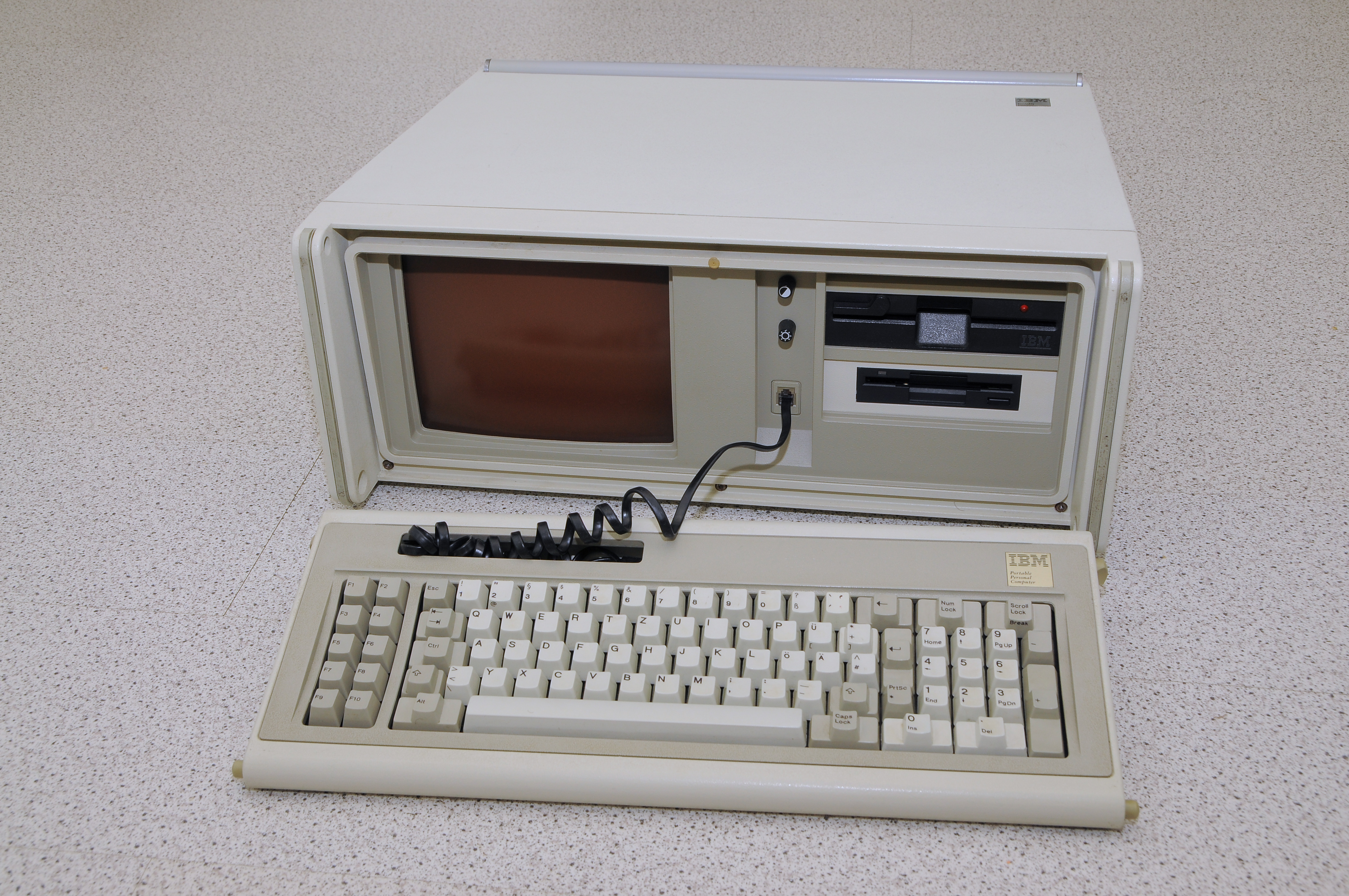
Floppy-based portable
Modelo 5155
CPU 8088
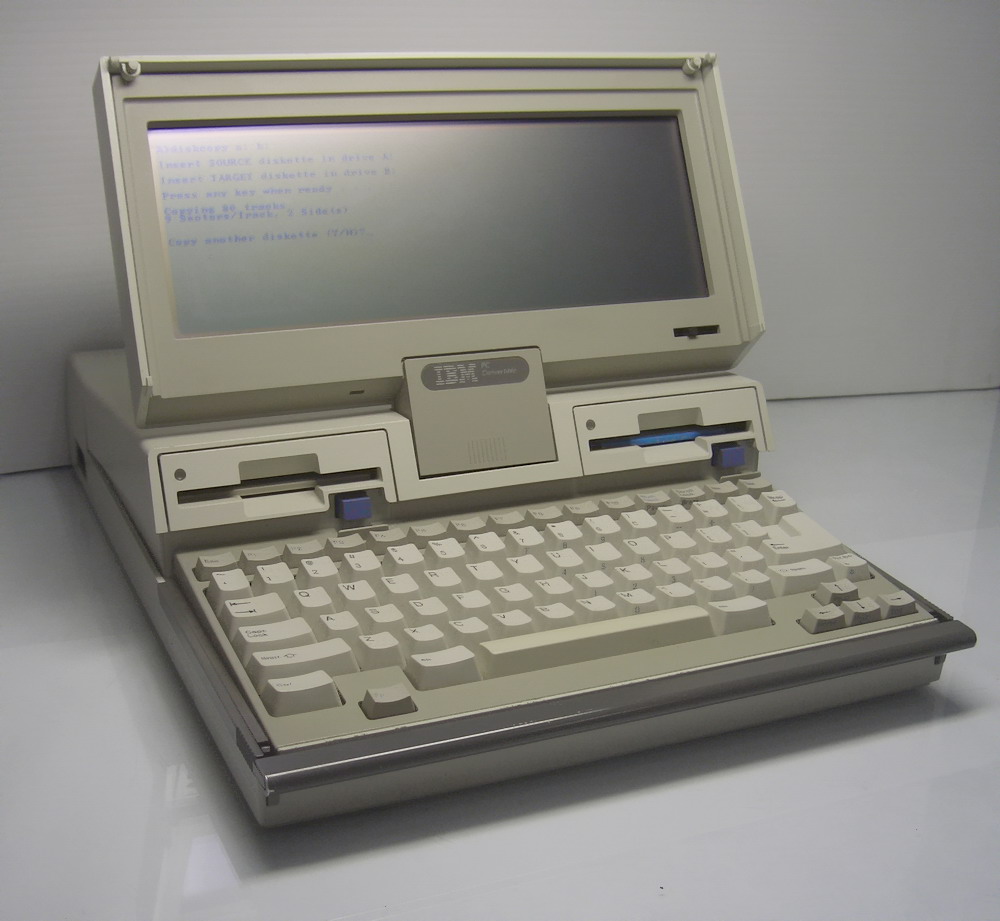
Microfloppy laptop portable
Modelo 5140
CPU 8088
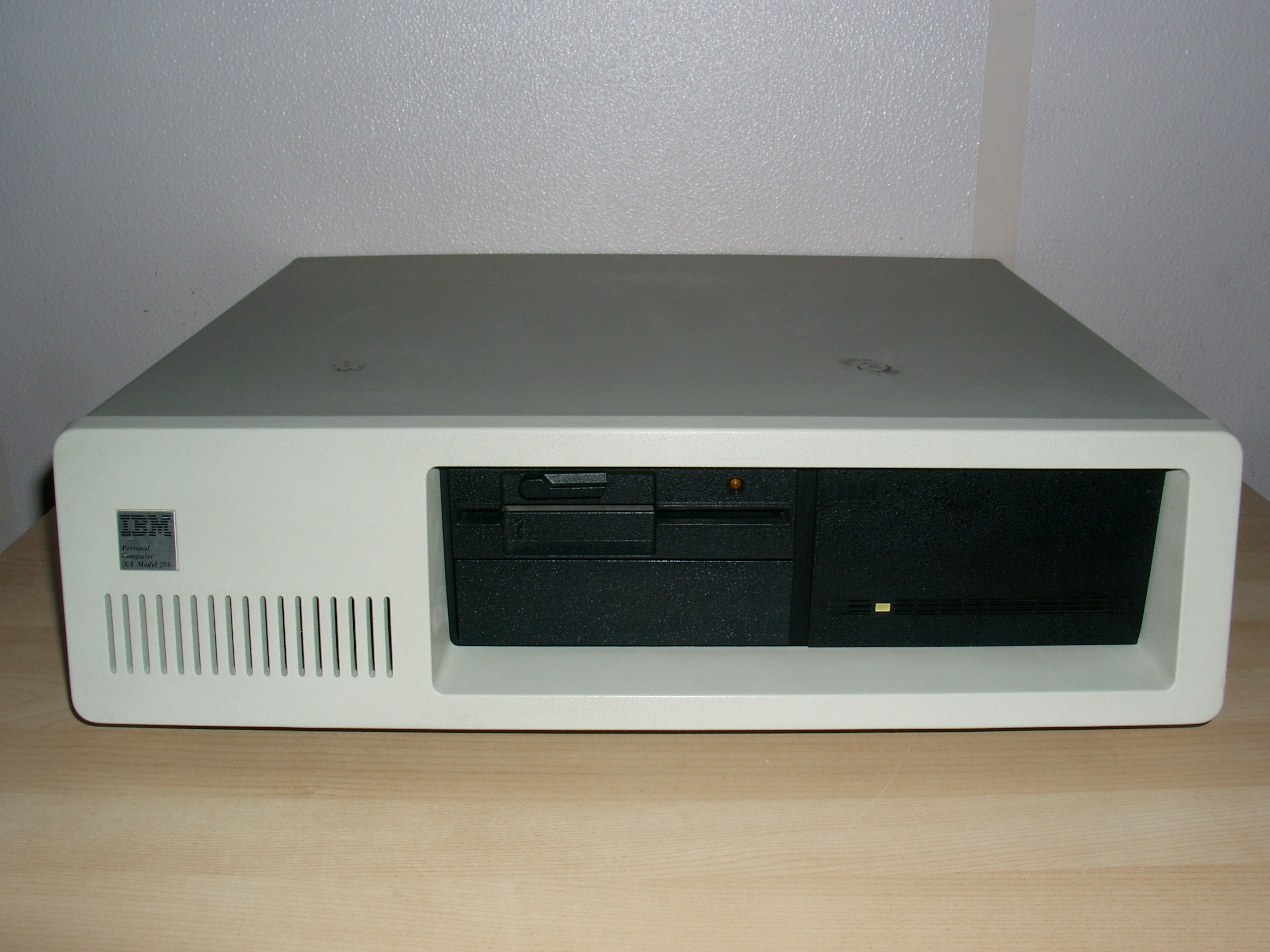
Slow hard disk, but zero wait state memory on the motherboard. This 6 MHz machine was actually faster than the 8 MHz ATs (when using planar memory) because of the zero wait states
Modelo 5162
CPU 8286
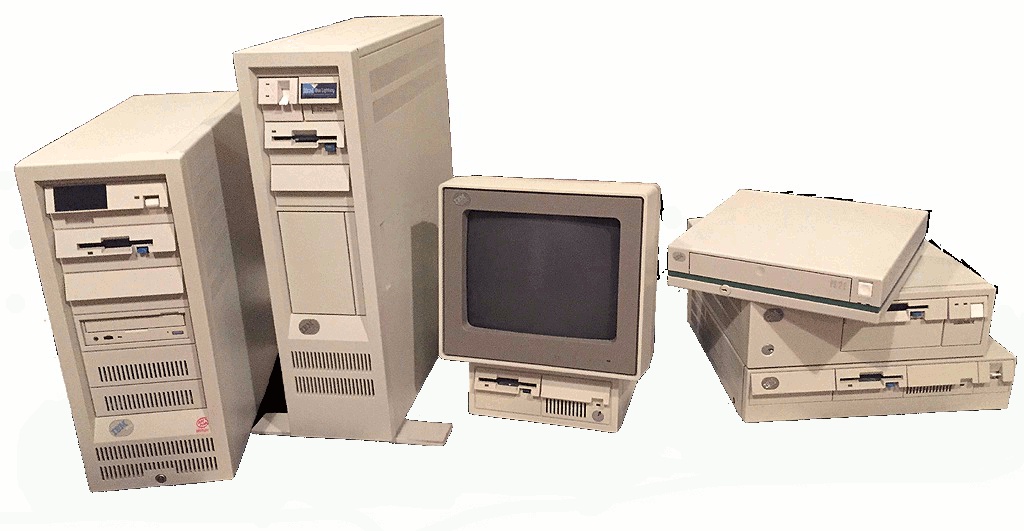
El Personal System/2 o PS/2 es la segunda generación de ordenadores personales (PC) de IBM. Lanzada en 1987, fue creada por IBM en un intento de recapturar el control del mercado del PC introduciendo una arquitectura propietaria avanzada. Aunque la gran presencia en el mercado del Gigante Azul parecía asegurarle unas ventas muy numerosas, fracasó en su intento de devolver el control del mercado del PC a IBM. Debido a los altos costes de una arquitectura cerrada, los clientes preferían los PCs de la competencia que extendían la existente arquitectura del PC en lugar de abandonarla por algo nuevo. No obstante, muchas de las innovaciones del PS/2 como la unidad de disquete de 3,5 pulgadas HD (Alta Densidad, 1440 KiB), los SIMM (Single In-line Memory Module) de 72 pines, la nueva interfaz de teclado y ratón (puertos PS/2), y la tarjeta gráfica VGA, devinieron en estándar de los PCs. El sistema operativo IBM OS/2 se introdujo con la línea PS/2 como su sistema operativo nativo. IBM diseñó los PS/2 para ser compatibles en software con la línea de ordenadores PC/AT/XT que originaron el gigantesco mercado del compatible IBM PC, pero muy diferentes en el hardware. Los PS/2 tienen dos BIOS. La primera, llamada ABIOS (Advanced BIOS) proporciona una nueva interfaz de modo protegido que es usado por OS/2. La segunda, llamada CBIOS (Compatible BIOS) se incluye sólo para que permanezcan compatible con los PC/AT/XT. Micro Channel Architecture Los IBM Personal System/2 introdujeron la Micro Channel Architecture (Arquitectura de Microcanal o MCA para abreviar) que es técnicamente superior al Bus ISA y diseñado para mantener una velocidad mayor de comunicación con el resto del sistema. El bus MCA presenta varios avances que no se verán en otros estándares de interfaz hasta varios años después. La velocidad de transferencia está a la par del muy posterior bus PCI. MCA permite manejo de transacciones uno a uno, tarjeta a tarjeta y multitarjeta a procesador simultáneamente, lo que es una prestación del bus PCI-X. Capacidad de Busmastering, arbitrio del bus y verdadero manejo plug-and-play del hardware por parte de la BIOS son beneficios del bus MCA. Además su arquitectura es de 32 bits, mientras que la de ISA es de 16 bits. Pese a todas esas ventajas técnicas, la Arquitectura Micro Channel nunca ganó amplia aceptación fuera de los PS/2 debido a las políticas anti-clon de IBM y a la incompatibilidad con ISA. IBM ofrecía una licencia Micro Channel a todo el que pudiera pagar el royalty, pero no sólo pedía un royalty por máquina fabricada con esa arquitectura, sino también un pago por cada compatible PC que el fabricante hubiera vendido tanto en el pasado como en el futuro. El ST-506 fue el primer disco duro de 5,25 pulgadas lanzado en 19801 por Seagate Technology, se conectaba a un ordenador a través de un controlador de disco. Como consecuencia de la aprobación de IBM, la mayor parte de las unidades en la década de 1980 se basaron en el ST-506.
*PS/2 Model 25
  Model 25: 8086/8 - ISA
  Model 25-286 : 80286/10 - ISA
  Model 25LS : 80286/10 - ISA
*PS/2 Model 30
  Model 30-8 : 8086/8 - ISA
  Model 30-286 : 80286/10 - ISA
*PS/2 Model 35
  Model 35-SX : 80386SX/20 - ISA
  Model 35-SLC : 80386SLC/20 - ISA
  Model 35-LS : 80386SX/20 - ISA
*PS/2 Model 40
  Model 40-SX : 80386SX/20 - ISA
  Model 40-SLC : 80386SLC/20 - ISA
*PS/2 Model 50
  Model 50 : 80286/10 - MCA
  Model 50-Z : 80286/10 - MCA
*PS/2 Model 53
  Model 53-SLC2 : 80486SLC2/25 - MCA
  Model 53-LS : 80486SLC2/25 - MCA
*PS/2 Model 55
  Model 55-SX : 80386SX/16 - MCA
  Model 55-LS : 80386SX/16 - MCA
*PS/2 Model 56
  Model 56-SX : 80386SX/20 - MCA
  Model 56-SLC : 80386SLC/20 - MCA
  Model 56-SLC2 : 80486-SLC2/25 - MCA
*PS/2 Model 57
  Model 57-SX : 80386SX/20 - MCA
  Model 57-SLC : 80386SLC/20 - MCA
  Model 57-SLC2 : 80486SLC2/25 - MCA
 Model 57-Ult : 80486SLC2/25 - MCA
*PS/2 Model 60
  Model 60 : 80286/10 - MCA
*PS/2 Model 65
  Model 65-SX : 80386SX/16 - MCA
*PS/2 Model 70
  Model 70 : 80386/16 - MCA
  Model 70-A : 80386/25 - MCA
  Model 70-E : 80386/16 - MCA
  Model 70-386 : 80386DX/20 - MCA
  Model 70-486 : 80486/DX2/33 - MCA
  Model 70-B : 80486/25 - MCA
*PS/2 Model P70-75 (portables)
  Model P70-386 : 80386DX/20 - MCA
  Model P75-486 : 80486DX/33 - MCA

*PS/2 Model 77
  Model 77 : 80486DX2/66 - MCA
*PS/2 Model 80
  Model 80-386 : 80386DX/16 - MCA
  Model 80-Axx : 80386DX/20 - MCA
*PS/2 Model 85
  Model 85 : 80486DX/33 - MCA
*PS/2 Model 90
  Model 90 XP : 80486DX/33 - MCA o 80486DX2/50 - MCA
*PS/2 Model 95
  Model 95 Server : 80486DX2/66 - MCA o 80586-60/66 - MCA
Video Graphics Array (VGA) is a video display controller and accompanying de facto graphics standard, first introduced with the IBM PS/2 line of computers in 1987, which became ubiquitous in the IBM PC compatible industry within three years. The term can now refer to the computer display standard, the 15-pin D-subminiature VGA connector, or the 640×480 resolution characteristic of the VGA hardware. VGA was the last IBM graphics standard to which the majority of IBM PC compatible computer manufacturers conformed, making it the lowest common denominator that virtually all post-1990 PC graphics hardware can be expected to implement.
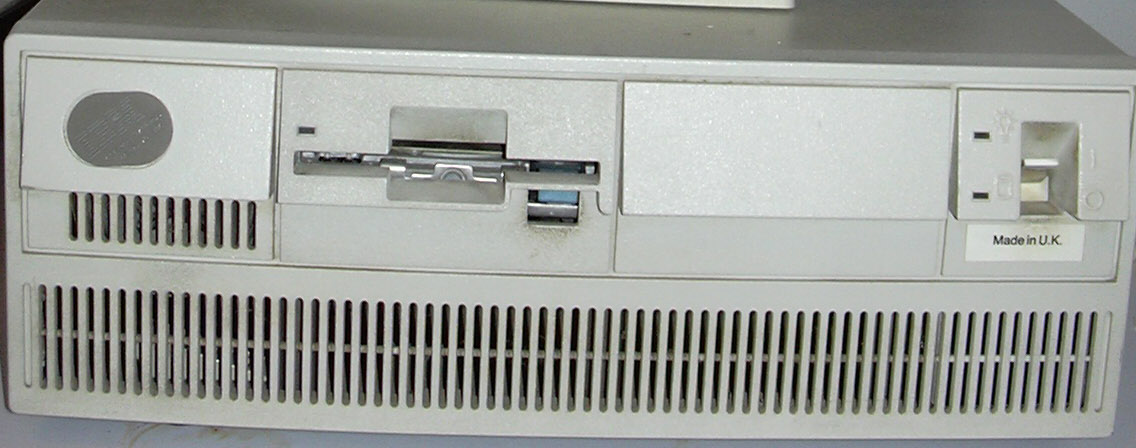
Microprocessor: Intel 80386 (32 bit, DX processor)
Clock speed: 16 Mhz (E21), 20Mhz (1xx models), 25Mhz (Axx models)
Coprocessor: socket for optional i80387 math coprocessor
Type of BUS: 16/32-bit Micro Channel (1 16-bit, 2 32-bit slots)
Total number of expansion slots: 3 (desktop case)
Ports: PS/2 keyboard, PS/2 mouse, serial, parallel, VGA
Memory Min/Max on system board: 1/6MB (Exx,1xx), 2/8MB (Axx) (expandable to 16MB with memory options)
Type of memory: RAM: DRAM (PS/2 72-pin SIMM) 85ns parity checked (3 sockets (4 on Axx models for 80ns SIMMS))
ROM: 128kb Cache: 0kb (Exx), 0kb (1xx), 64kb SRAM L2 cache (Axx only)
Mass storage Drive bays: 3 ( 3.5 half-height (2 accessable))
Floppy Disk Size: 3.5 inch half-height
Capacity: 1.44MB
Hard disk Size: 3.5 inch half-height
Capacity: 60MB, 120MB, Access time: 27ms, 23ms
Interface: ESDI
Display Size:
Display type: Optional Analog CRT
Graphics modes supported: Integrated VGA Display adapter 320x200, 256 colours 640x480, 16 colours
Keyboard Type: 101 key enhanced
Operating system: IBM PC DOS Versions 3.30 or higher, OS/2 1.0SE or higher, AIX PS/2
ISA 16-bit
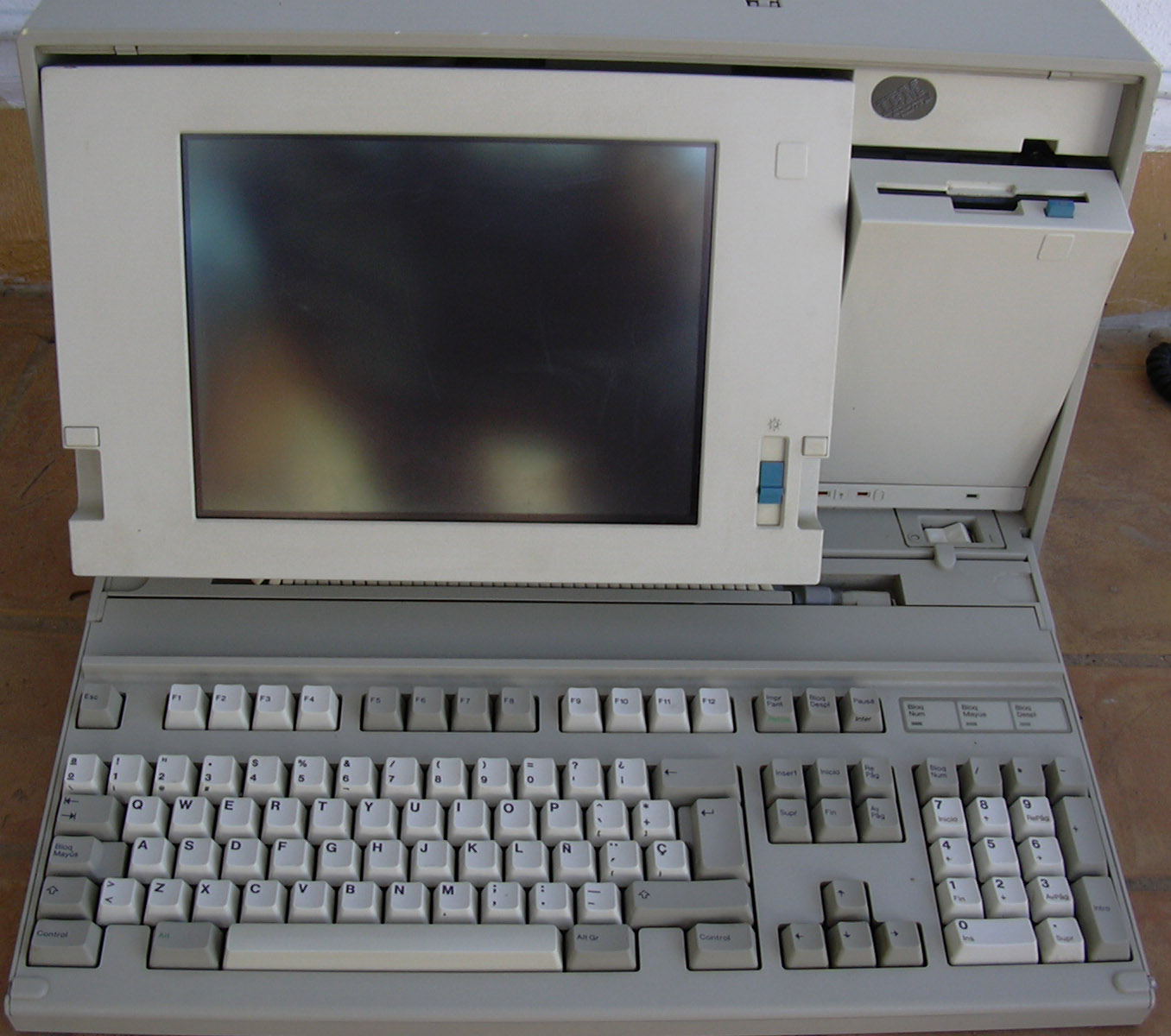
Processor: Cyrix Cx486DLC @ 20 MHz
Coprocessor: Cyrix Cx83D87 @ 20 MHz - Memory: 8 Mbytes (options range from 2M to 8M) - Bus: 2 MCA slots, one 32 bit and one 16 bit - Interfaces (onboard): Mouse, Keyboard 1 x Serial 1 x Parallel Floppy (1.44M), one internal drive and unconventional connector for external drive ESDI hard disk (DBA interface) VGA (additional connector for external monitor) - Add-on cards: 3COM 3C529 Ethernet card IBM MCA SCSI controller - Operating System(s): OS/2 Warp Version 3 Caldera OpenDOS 7.01 Linux 2.0 (Slackware-based)
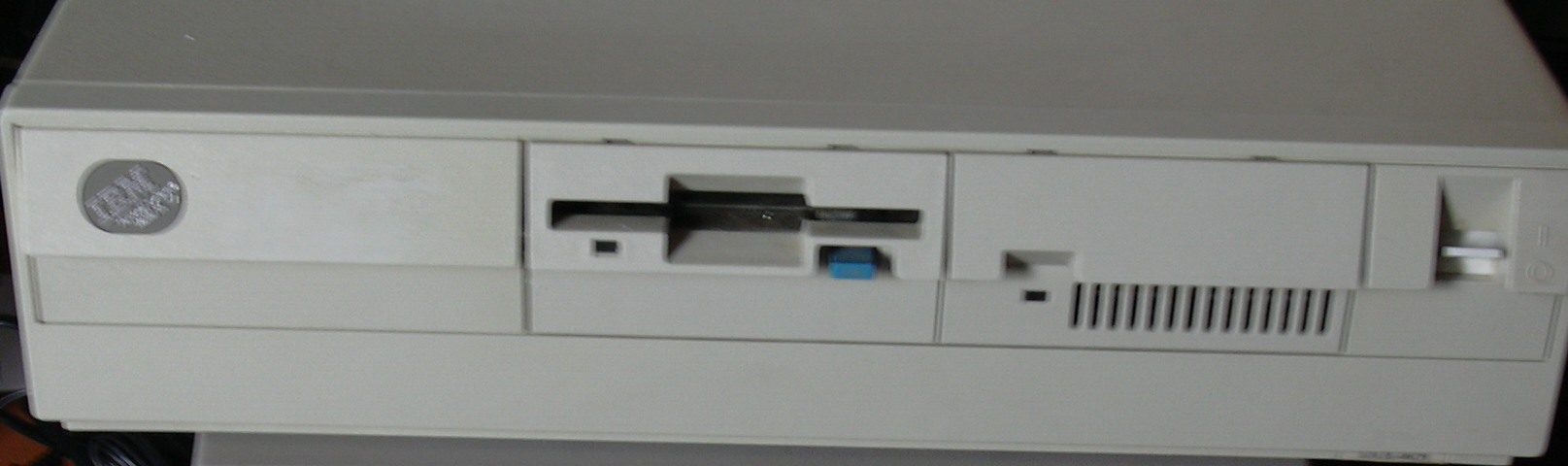
El Personal System/2 o PS/2 es la segunda generación de ordenadores personales (PC) de IBM. Lanzada en 1987, fue creada por IBM en un intento de recapturar el control del mercado del PC introduciendo una arquitectura propietaria avanzada. Aunque la gran presencia en el mercado del Gigante Azul parecía asegurarle unas ventas muy numerosas, fracasó en su intento de devolver el control del mercado del PC a IBM. Debido a los altos costes de una arquitectura cerrada, los clientes preferían los PCs de la competencia que extendían la existente arquitectura del PC en lugar de abandonarla por algo nuevo. No obstante, muchas de las innovaciones del PS/2 como la unidad de disquete de 3,5 pulgadas HD (Alta Densidad, 1440 KiB), los SIMM (Single In-line Memory Module) de 72 pines, la nueva interfaz de teclado y ratón (puertos PS/2), y la tarjeta gráfica VGA, devinieron en estándar de los PCs. IBM diseñó los PS/2 para ser compatibles en software con la línea de ordenadores PC/AT/XT que originaron el gigantesco mercado del compatible IBM PC, pero muy diferentes en el hardware. Los PS/2 tienen dos BIOS. La primera, llamada ABIOS (Advanced BIOS) proporciona una nueva interfaz de modo protegido que es usado por OS/2. La segunda, llamada CBIOS (Compatible BIOS) se incluye sólo para que permanezcan compatible con los PC/AT/XT. Micro Channel Architecture[editar] Los IBM Personal System/2 introdujeron la Micro Channel Architecture (Arquitectura de Microcanal o MCA para abreviar) que es técnicamente superior al Bus ISA y diseñado para mantener una velocidad mayor de comunicación con el resto del sistema. El bus MCA presenta varios avances que no se verán en otros estándares de interfaz hasta varios años después. La velocidad de transferencia está a la par del muy posterior bus PCI. MCA permite manejo de transacciones uno a uno, tarjeta a tarjeta y multitarjeta a procesador simultáneamente, lo que es una prestación del bus PCI-X. Capacidad de Busmastering, arbitrio del bus y verdadero manejo plug-and-play del hardware por parte de la BIOS son beneficios del bus MCA. Además su arquitectura es de 32 bits, mientras que la de ISA es de 16 bits. Pese a todas esas ventajas técnicas, la Arquitectura Micro Channel nunca ganó amplia aceptación fuera de los PS/2 debido a las políticas anti-clon de IBM y a la incompatibilidad con ISA. IBM ofrecía una licencia Micro Channel a todo el que pudiera pagar el royalty, pero no sólo pedía un royalty por máquina fabricada con esa arquitectura, sino también un pago por cada compatible PC que el fabricante hubiera vendido tanto en el pasado como en el futuro. El ST-506 fue el primer disco duro de 5,25 pulgadas lanzado en 19801 por Seagate Technology, se conectaba a un ordenador a través de un controlador de disco. Como consecuencia de la aprobación de IBM, la mayor parte de las unidades en la década de 1980 se basaron en el ST-506.
Manufacturer IBM (chips 8943 or earlier), planar id FBFF
BIOS IBM, Nov. 2, 1988 (24/10/89 sticker)
Processor Intel 80386SX-16MHz (32-bit), PQFP
Coprocessor Socket for optional i80387SX Math coprocessor
Memory 2 sockets for 85ns 72-pin SIMMs (PS/2 type), parity checked (*)
Max on system board 8 Mb (2 x 4 Mb)
Max. using adapter cards 16 Mb (about 15,5 Mb usable)
Bus Micro channel (MCA) 16-bit
Expansion slots 3 (16-bit, one w. video ext.)
Video Integrated 16-bit VGA display adapter (256 Kb, max. 320x200, 256 colours or 640x480, 16 colours)
Interface
HDD (2 units type ST-506)
FDD (2 units)
Ports PS/2 keyboard, PS/2 mouse, serial (UART 16550), parallel, VGA
El ordenador más viejo que ha estado trabajando en la UPO (hasta abril de 2005)
he Extended Graphics Array (XGA) is an IBM display standard introduced in 1990. Later it became the most common appellation of the 1024 × 768 pixels display resolution, but the official definition is broader than that. The initial version of XGA expanded upon IBMs older VGA by adding support for four new screen modes, including one new resolution: 640 × 480 pixels in direct 16 bits-per-pixel (65,536 color) RGB hi-color and 8 bit/px (256 color) palette-indexed mode. 1024 × 768 pixels with a 16- or 256-color (4 or 8 bit/px) palette, using a low frequency interlaced refresh rate. XGA-2 added a 24-bit DAC, but this was used only to extend the available master palette in 256-color mode, e.g. to allow true 256-greyscale output. Other improvements included the provision of the previously missing 800 × 600 resolution in up to 65,536 colors, faster screen refresh rates in all modes (including non-interlace, flicker-free output for 1024 × 768), and improved accelerator performance and versatility. All standard XGA modes have a 4:3 aspect ratio with square pixels, although this does not hold for certain standard VGA and third-party extended modes (640 × 400, 1280 × 1024).implement.
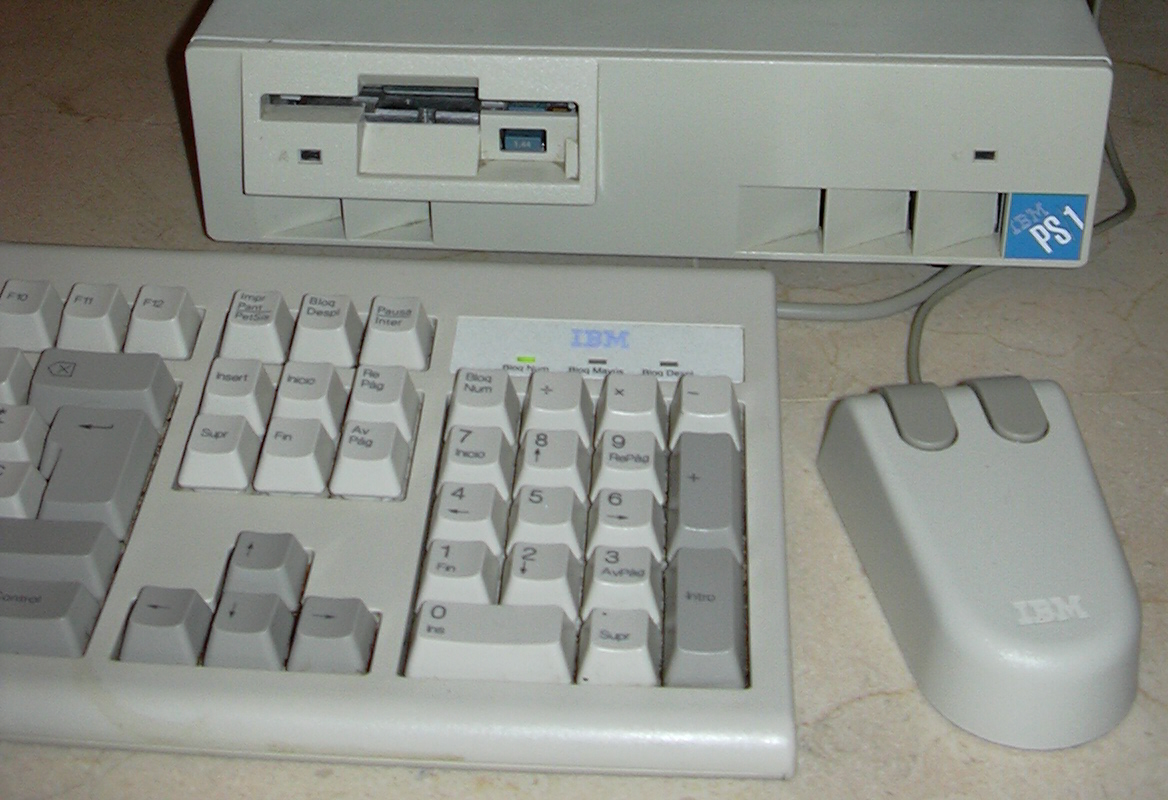
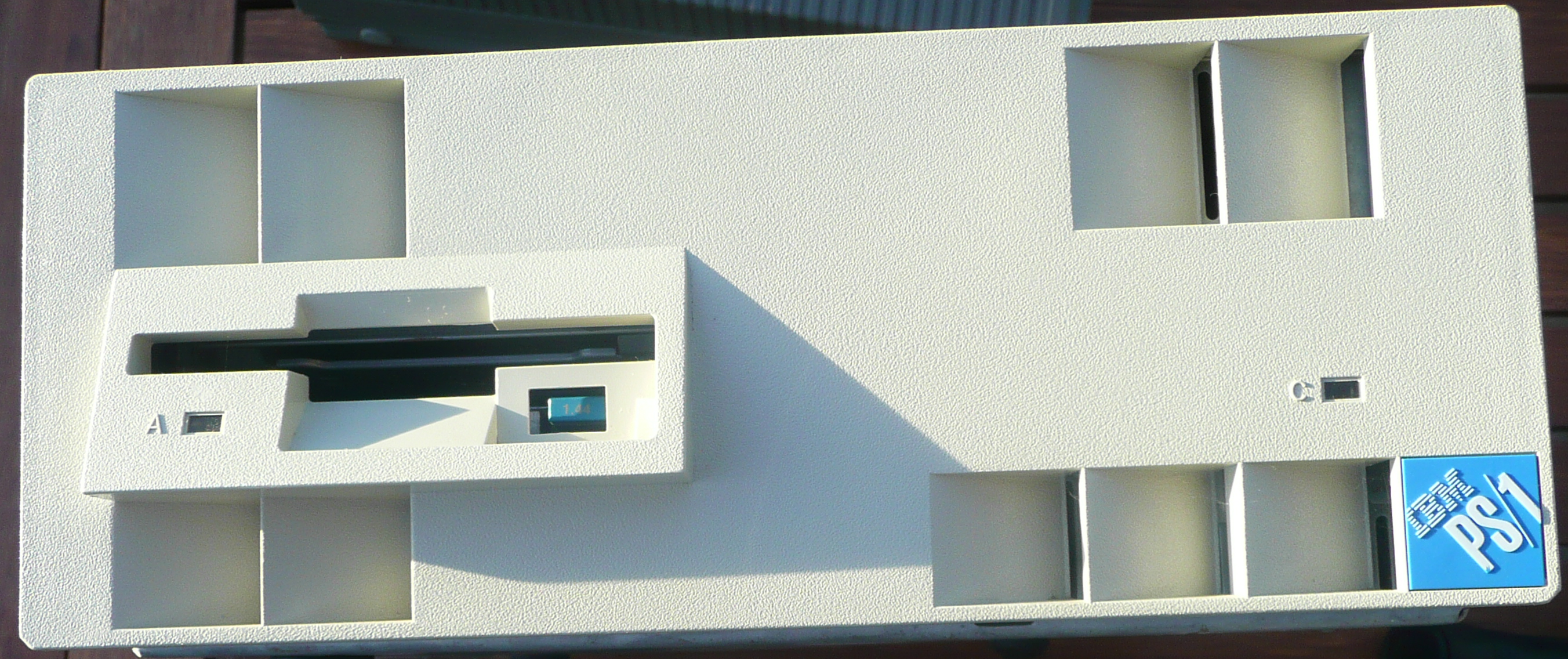
The IBM PS/1 is a brand for a line of personal computers and was IBMs return to the home market in 1990, five years after the IBM PCjr. It was replaced by the IBM Aptiva in September 1994. Like the PCjr, the PS/1s name suggested a more limited machine than IBMs business line, the PS/2. However, unlike the PS/2, the PS/1 was based upon architecture closer to the AT and compatibles, such as using ISA, plain VGA, and IDE. The PS/1 line was created for new computer users and was sold in consumer electronics stores alongside comparable offerings from Compaq, Hewlett-Packard, Packard Bell, and others. American PS/1 models came with a modem installed so users could access online IBM help services, which were provided by partnerships with Prodigy and Quantum. Although the first models used custom designed components and design, later desktop and tower models used mostly standard components. The earlier models included a ROM with IBMs PC DOS and a graphical shell, however the system was compatible with other DOS implementations and the shell could be installed on the hard-drive. Later models included a feature called Rapid Resume which gave the computers the ability to go into standby mode as well as a hibernation function. There were several form factors used during the PS/1s production: 2011 Proprietary design, power supply is within CRT 2121 Proprietary design, power supply is within CRT, up to two available ISA slots 2123 Limited production model. Based on IBM PS/2 model 30 case, three available ISA slots 2133 Desktop case. The 3x3 references the available slots and drive bays. 2155 Desktop case larger than 2133. The 5x5 references the available slots and drive bays. Including a 5.25 bay. 2168 Tower unit. The 6x8 references the available slots and bays. Including 5.25 bays. The 2133 and 2155 cases were used in several model years with the 2168 tower unit appearing a bit later.
*IBM PS/1 (model 2011)
Type	Personal computer
Release date	1990
Operating system	PC DOS 4.01 (in ROM)
CPU	Intel 80286 @ 10 MHz
Memory	512 KB ~ 1 MB

*IBM PS/1 (model 2121)
Type	Personal computer
Release date	1992
Discontinued	1993
Operating system	PC DOS 4.01 (in ROM)
CPU	Intel 80386SX @ 16 MHz ~ 20 MHz
Memory	2 MB ~ 6 MB

*IBM PS/1 (model 2133)
Type	Personal computer
Release date	1992
Discontinued	1993
Operating system	PC DOS 4.01
CPU	Intel 80386SX @ 25 MHz or 80486SX @ 20 MHz or 80486SX @ 25 MHz or 80486DX @ 33 MHz
Memory	2 MB ~ 16 MB (2-4MB on-board)

*IBM PS/1 (model 2155)
Type	Personal computer
Release date	1993
Discontinued	1994
Operating system	PC DOS 6.00 / Windows 3.1
CPU	Intel 80486SX @ 25 MHz or Intel 80486SX @ 33 MHz
Memory	2 MB ~ 6 MB
Intel i80286 a 10 MHz - Memoria : 512 Ko extensible por modulo proprietairo de 512 Ko a 2 Mo
Disco duro de 40 Mo y lector 31/2 de 1,44 Mo - IBM-Dos 4.01 en ROM. Works para DOS preinstalado.
2MB (6MB)
40MB
386sx at 20MHz
VGA
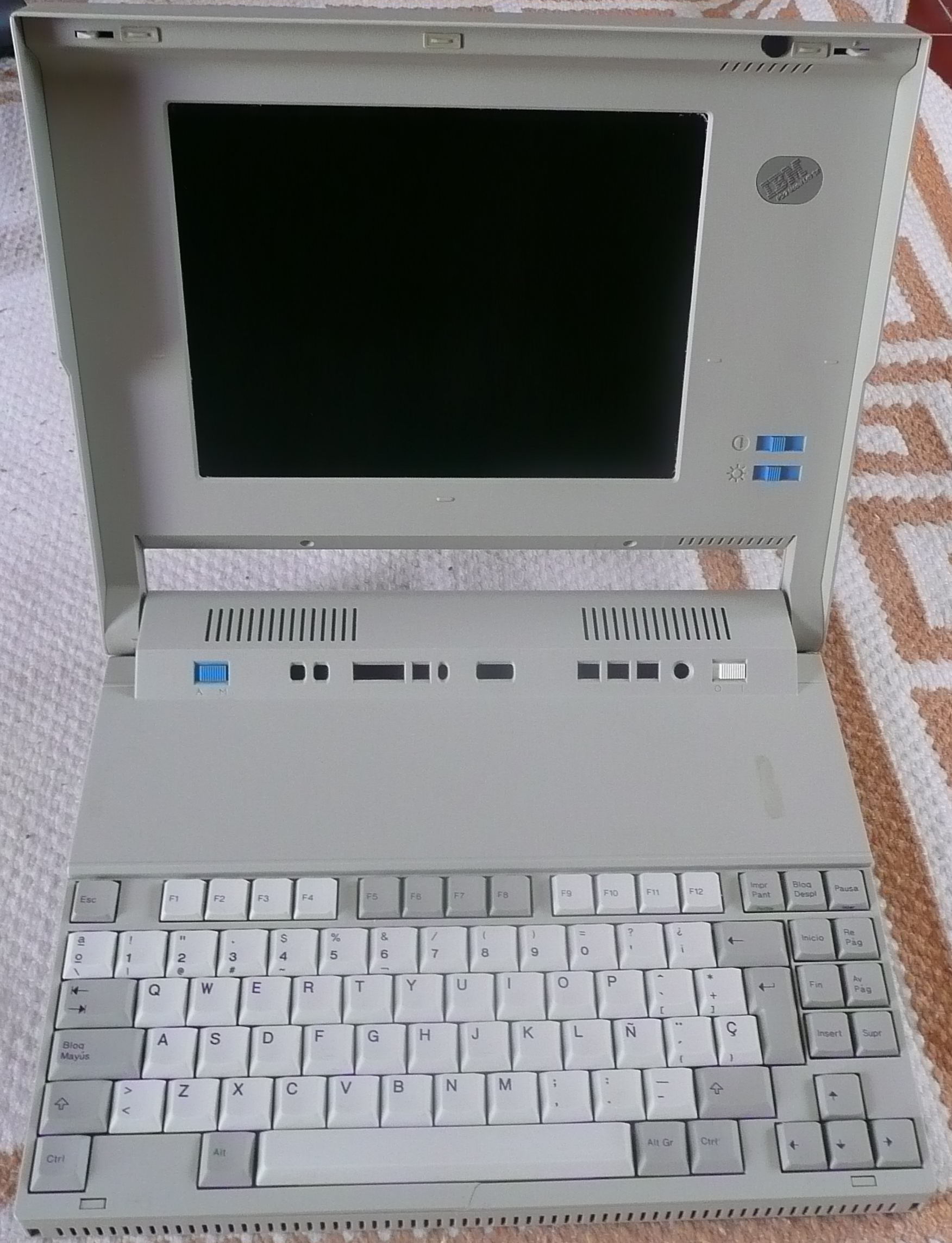
Power source:
    -   Rechargeable Battery
    -   AC Adapter, automatically switches to 90 - 137 V ac or 180 - 264 V ac
    -   Quick Charger
    -   50 or 60 Hz
  System board:
    -   20-MHz 80386SX (**) Microprocessor
    -   80387SX (**) Math Coprocessor socket
    -   Diskette-drive controller
    -   Parallel port
    -   Serial port
    -   External-display connector
    -   Pointing-device or numeric keypad connector
    -   System-expansion connector
    -   Minimum of 2MB (1MB = 1 048 576 bytes) random access memory (RAM), up to 18MB expandability on board
    -   Real-time-clock circuitry, configuration and status information storage provided by the real-time clock/complementary metal oxide semiconductor (RT/CMOS) RAM
    -   Read-only memory basic input/output system (ROM BIOS)
    -   Suspend and Resume modes
 Video Graphics Array (VGA) with Liquid Crystal Display (LCD) control
 Liquid Crystal Display
    -   640 X 480 PELs
    -   32 shades of gray addressable
 Built-in LCD status display
 A 60MB hard disk drive (fixed disk drive)
 A 1.44MB 3.5-inch diskette drive
 84/85-key keyboard physically unique to the Model L40 SX
 Speaker
 Separate 17-key numeric keypad
 Trackpoint
 Carrying case
 Optional Internal Data/Fax Modem (U.S./Canada only) or Serial Adapter
 Backup battery (to keep real-time clock circuitry, configuration, and status information active when power is off)
 Standby battery to supply power to the system during replacement of  the rechargeable battery.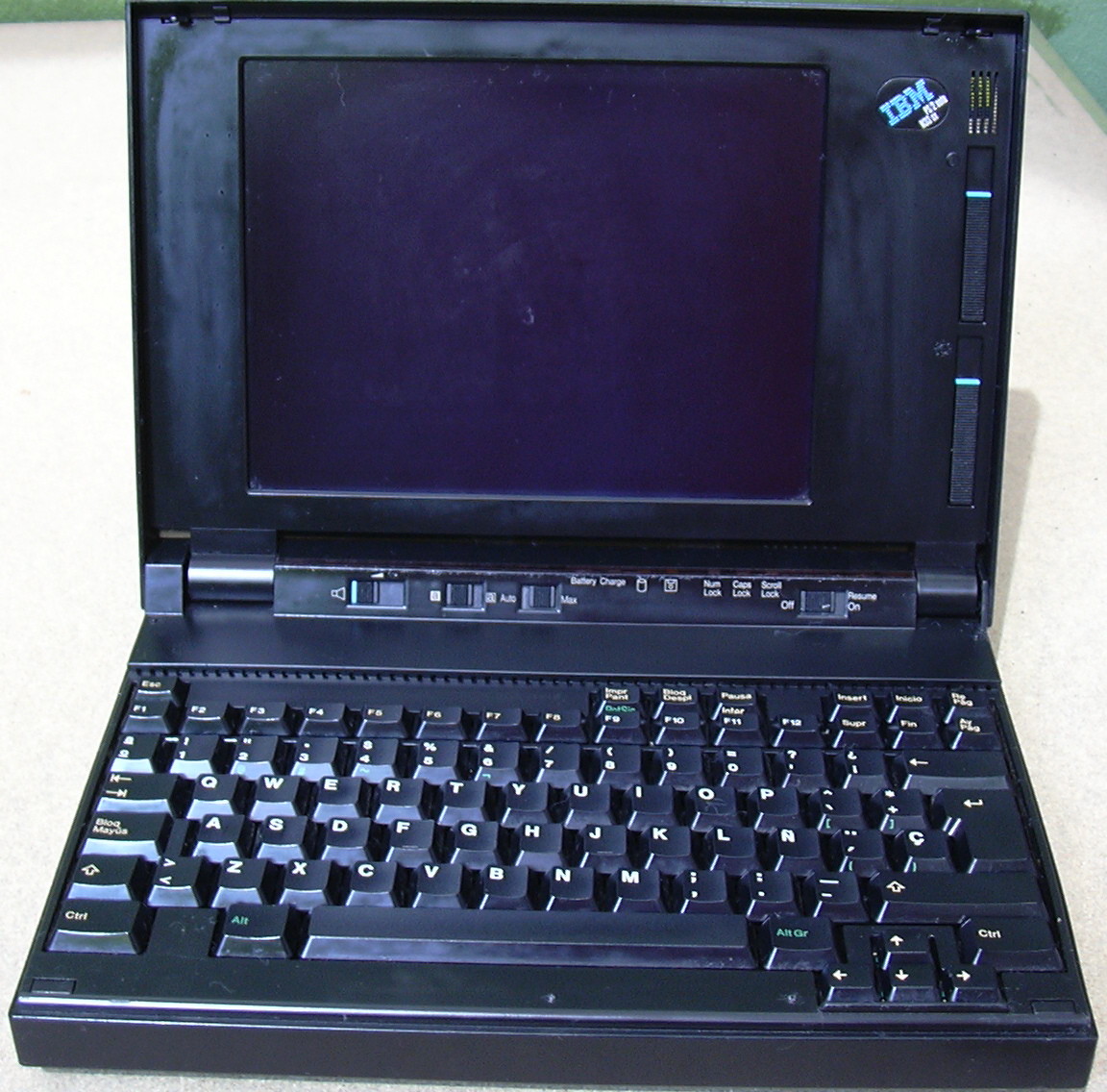
16-bit Notebook-Computer
Markteinführung
 1991
Prozessor
 Intel 80386SX
Taktung
 12 MHz
RAM / ROM
 2MB / 64KB (max. 6MB RAM)
Tastatur
 Schreibmaschine mit 85 Tasten, mechanisch, QWERTZ
Betriebssystem(e)
 IBM PC DOS 5.0
Massenspeicher
 3,5 FDD mit 1,44MB, 40MB HD
Grafik / Text
 max. 640 x 480 (VGA) bei 256 Farben, Textmodus 80 x 25
Sound
Verbreitung
 gering
Bemerkungen
 Kompaktes Notebook im schwarzen Gehäuse mit monochromen 9,5 LCD Display.
Zustand tech./opt.
 2/2
Abbildung(en)
 folgt nach
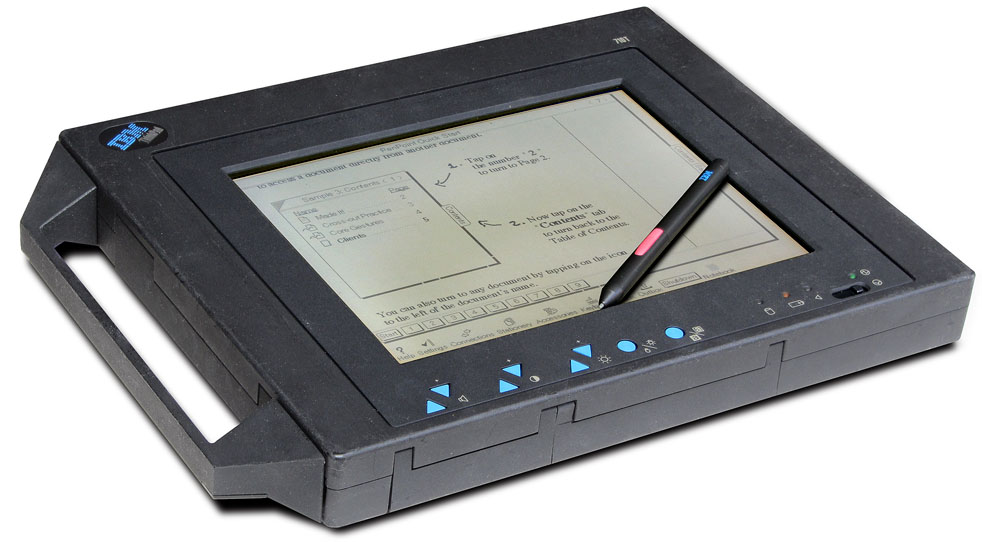
Tablet computer of the 1990 that are able to run PenPoint, the Operating System the company GO developed for the first real pen computers.
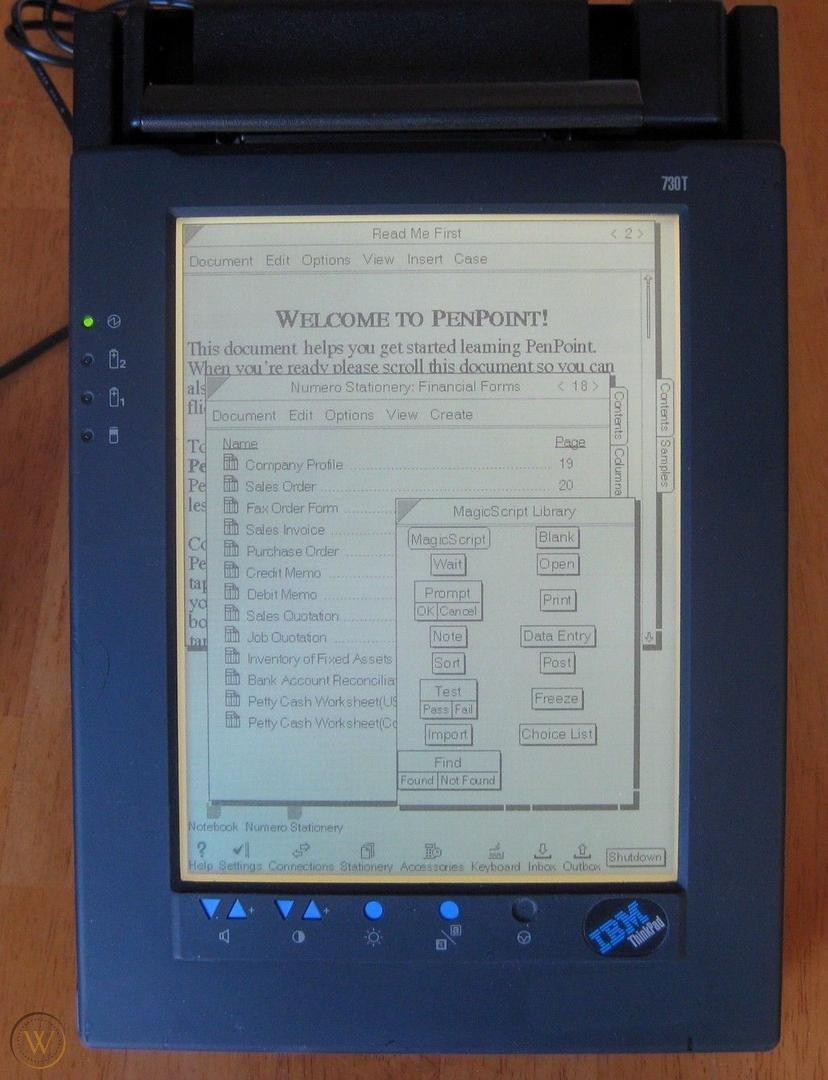
Tablet computer of the 1990 that are able to run PenPoint, the Operating System the company GO developed for the first real pen computers.
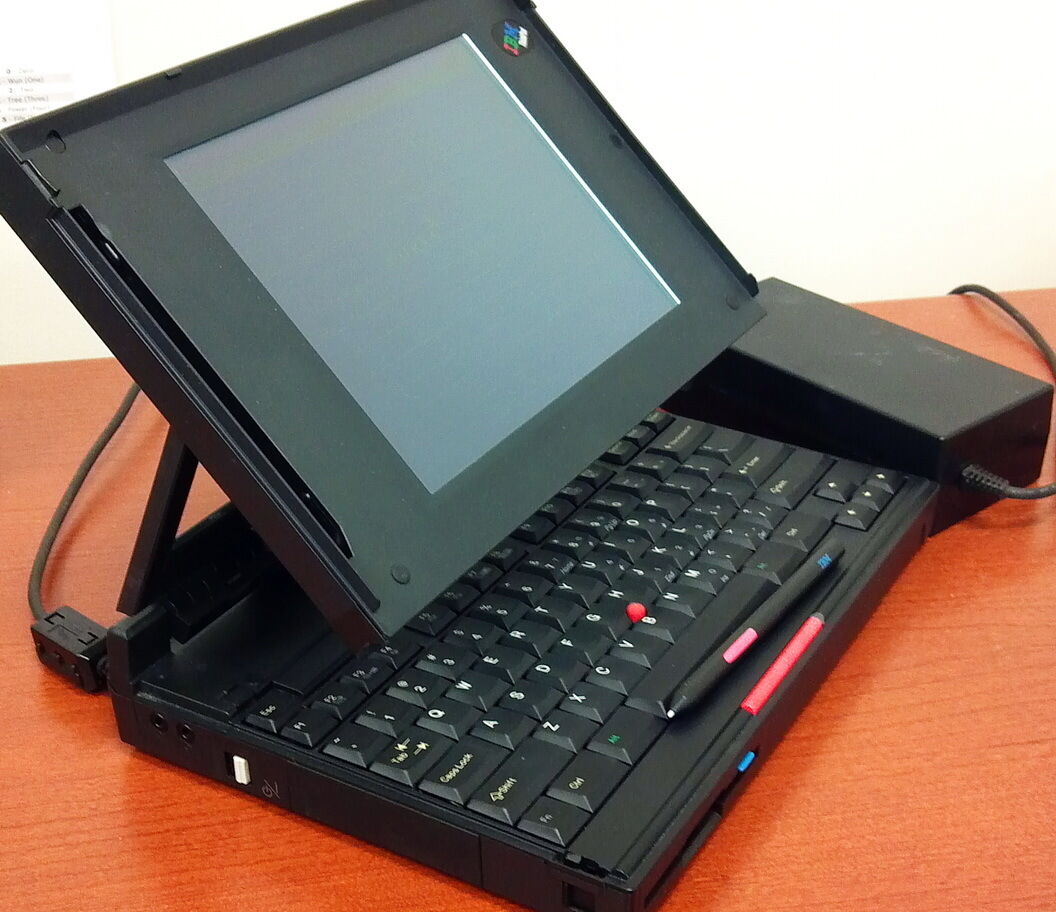
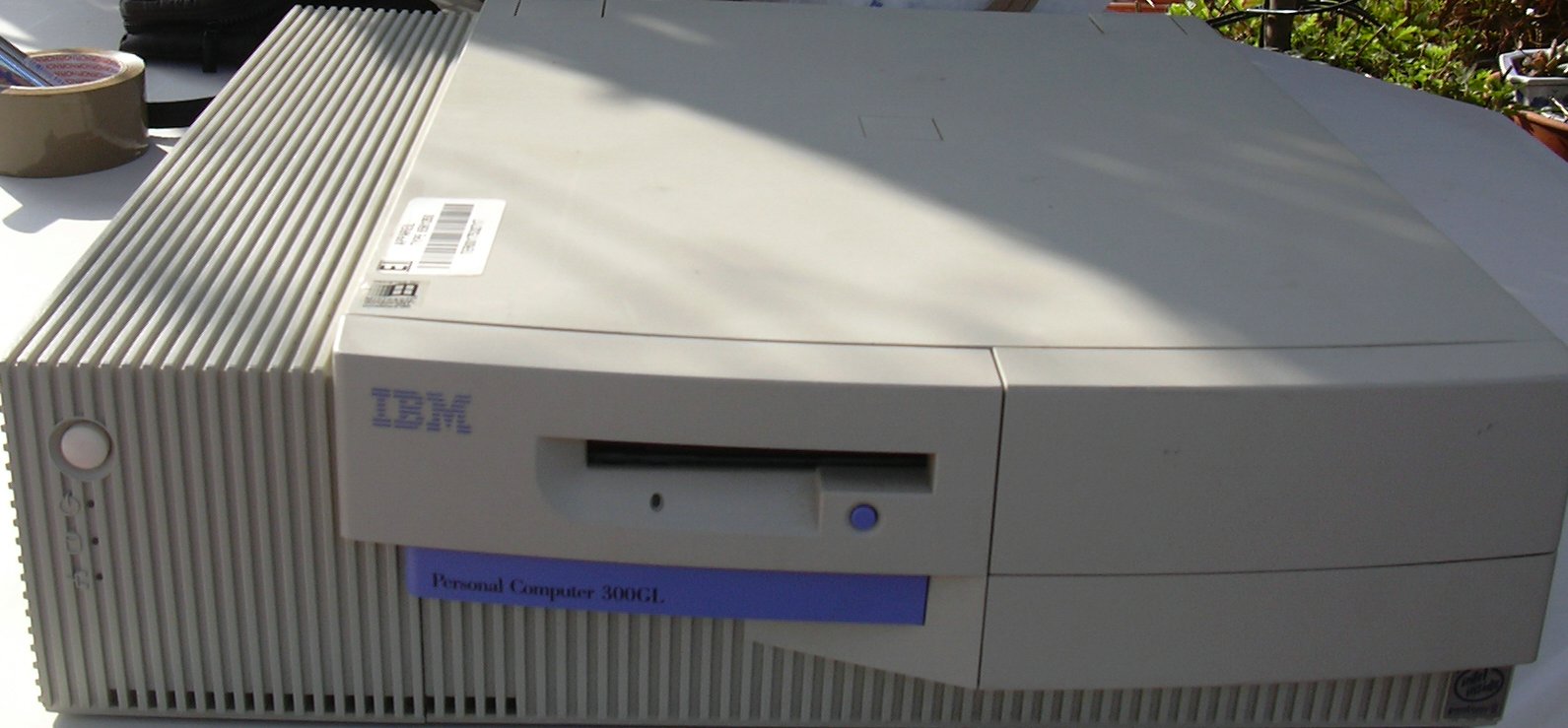
PII 266 MHz, 64 MB
Interactive Girls Club
Age Of Empires have a lot of EE
Alan Mathison Turing OBE FRS was an English mathematician, computer scientist, logician, cryptanalyst, philosopher, and theoretical biologist. Turing was highly influential in the development of theoretical computer science, providing a formalisation of the concepts of algorithm and computation with the Turing machine, which can be considered a model of a general-purpose computer. Turing is widely considered to be the father of theoretical computer science and artificial intelligence.
Electronic Games magazine
A bulletin board system or BBS (also called Computer Bulletin Board Service, CBBS[1]) is a computer server running software that allows users to connect to the system using a terminal program. Once logged in, the user can perform functions such as uploading and downloading software and data, reading news and bulletins, and exchanging messages with other users through public message boards and sometimes via direct chatting. In the early 1980s, message networks such as FidoNet sprung up to provide services such as NetMail, which is similar to email. Many BBSes also offer online games in which users can compete with each other. BBSes with multiple phone lines often provide chat rooms, allowing users to interact with each other. Bulletin board systems were in many ways a precursor to the modern form of the World Wide Web, social networks, and other aspects of the Internet. Low-cost, high-performance modems drove the use of online services and BBSes through the early 1990s. InfoWorld estimated that there were 60,000 BBSes serving 17 million users in the United States alone in 1994, a collective market much larger than major online services such as CompuServe. The introduction of inexpensive dial-up internet service and the Mosaic web browser offered ease of use and global access that BBS and online systems did not provide, and led to a rapid crash in the market starting in 1994. Over the next year, many of the leading BBS software providers went bankrupt and tens of thousands of BBSes disappeared. Today, BBSing survives largely as a nostalgic hobby in most parts of the world, but it is still an extremely popular form of communication for Taiwanese youth (see PTT Bulletin Board System).[2] Most surviving BBSes are accessible over Telnet and typically offer free email accounts, FTP services, IRC and all the protocols commonly used on the Internet. Some offer access through packet switched networks or packet radio connections.
Recopilatorio de juegos de PC. Distribuido en mercadillos.
- Chuck Norris no pelea en Tekken, tan solo observa, y cuando quiere ganar, frunce el ceño. Todos mueren por Perfect. - El God Mode en los videojuegos es en verdad Chuck Mode, pero no se le llama así por derechos de copyright de Chuck. - Chuck Norris juega online con la NDS sin wi-fi. - Chuck Norris podia ejecutar el Doom 3 en su spectrum 128 kbs. A máxima resolución y con filtros. - Los cartuchos de ET fueron enterrados en el desierto, porque la otra opción era enterrar el videojuego oficial de Chuck Norris. - Cuando Chuck Norris juega a Metal Gear Solid, los soldados tienen camuflaje: no quieren que Chuck Norris los vea. - Las vidas infinitas se pusieron en los juegos para que la gente corriente pudiera sentirse como Chuck Norris por un momento. - A Chuck Norris SÍ le gustó la peli de FFVII:AC. - Chuck norris se ha pasado el NFS Underground con el peugeot 206 sin modificar. - Chuck norris sabe como pulsar el rombo en el mando de PlayStation. - Chuck norris tiene el Super Mario 32 para Sega Saturn. - Chuck Norris no necesita arenas del tiempo para retroceder y corregir sus errores. Él nunca se equivoca ! - El mando de la PS3 no se cambia porque Chuck Norris no quiere. - Chuck Norris tiene los 386 Pokémon. - La PSP de Chuck Norris toma fotografías. - Chuck Norris se ha pasado el Nintendogs. - Chuck Norris ha jugado a Duke Nukem Forever. - Una vez una empresa sacó una consola sin el consentimiento de Chuck Norris, se llamaba Sega. - Las portátiles de Chuck Norris NUNCA tienen píxeles muertos, si los tiene es porque Chuck Norris los ha matado de una patada giratoria. - Chuck Norris usa la segunda equipación del barça en el Splinter Cell. - La Xbox 360 se llama así porque a Chuck Norris no le gustaron los 359 modelos anteriores. - Chuck norris ya tiene la ps3. - Chuck norris fue capaz de pasarse el GTA san andreas sin trucos, ni armas, y solo con la bici.
CLASS (CLS) was a notorious and prolific warez group that existed between January 1, 1997 and January 9, 2004.[2] The group was the target of federal raids such as Operation Fastlink. They specialized in cracked games, and sometimes had elaborate art in the cracktro or release (i.e. music, 3D animation, logo designs, etc.). They were a global group and had many members worldwide. Class used their group abbreviation, CLS, as a suffix at the end of the files they released. This group was involved in a long-standing rivalry with a competing game pirating group known as MYTH. The two groups released strictly ripped games, as opposed to the CD image content released by groups such as Fairlight. Games would be split into the base rip, which would have as little content as possible to fully play the game; additional media (usually movies or digital music) would be released as add-ons. For some releases, intro movie add-ons were released as well. They used advanced compression methods (most notably ACE) to reduce the size of the required downloads as much as possible; installers were specially crafted to use the abnormally compressed files. Many of their releases included a WAVE Injector/UHARC compression scheme, that decompressed and situated the files into a specific folder. These programs were at the core of their rip operation, as these programs (Wave Injector coded by CLASS/BACKLASH) are vital in decompressing the rips (i.e. games). CLASS stopped producing as of January 9, 2004, by releasing an endtro. This stated that after 1,234 releases they were giving up their throne.
CONSPIR4CY (releasing mostly as CPY) is a warez group founded in 1999 in Italy. They rose in notoriety after releasing Rise of the Tomb Raider and Inside in August 2016 under the name of CONSPIR4CY, though they continued using the CPY tag with the release of Doom in September 2016. They became the first group to create proper cracks for games protected by the latest Denuvo DRM software. They cracked Resident Evil 7: Biohazard only five days after its release, at the time the shortest amount of time taken to develop a crack for a Denuvo DRM-protected game. In July 2017, the warez group SKIDROW criticized the methods used by CONSPIR4CY to crack games using Denuvo DRM.
Recopilatorio de juegos de PC. Distribuido en mercadillos.
Corría el año 1994 cuando el Cybermaxx de Victormaxx llegó al mercado con soporte para PC y dos lentes de 0.7 pulgadas con una resolución de 505x230 pixeles. Sólo un año después, el Cybermaxx 2 impresionaba a las masas asistentes a la Expo de Entretenimiento Electrónico (E3) con una resolución mayor y soporte para VCR y consolas, no sólo para PC.
Interactive Girls Club
When playing as Bernard, go to Weird Eds room (the one with the hamster). If you use the computer, you will enter a game of Maniac Mansion, the prequel game of DotT.
Dennis MacAlistair Ritchie was an American computer scientist. He created the C programming language and, with long-time colleague Ken Thompson, the Unix operating system and B programming language. Ritchie and Thompson were awarded the Turing Award from the ACM in 1983, the Hamming Medal from the IEEE in 1990 and the National Medal of Technology from President Bill Clinton in 1999. Ritchie was the head of Lucent Technologies System Software Research Department when he retired in 2007. He was the R in K&R C, and commonly known by his username dmr.
Página 1 de 3