Inicio › Ordenadores › Psion

Psion

💾 Ordenadores13 fichas

Máquinas (1–13 de 13)

Psion Organiser
Psion Organiser
📅 1984
Ficha técnica

Historia

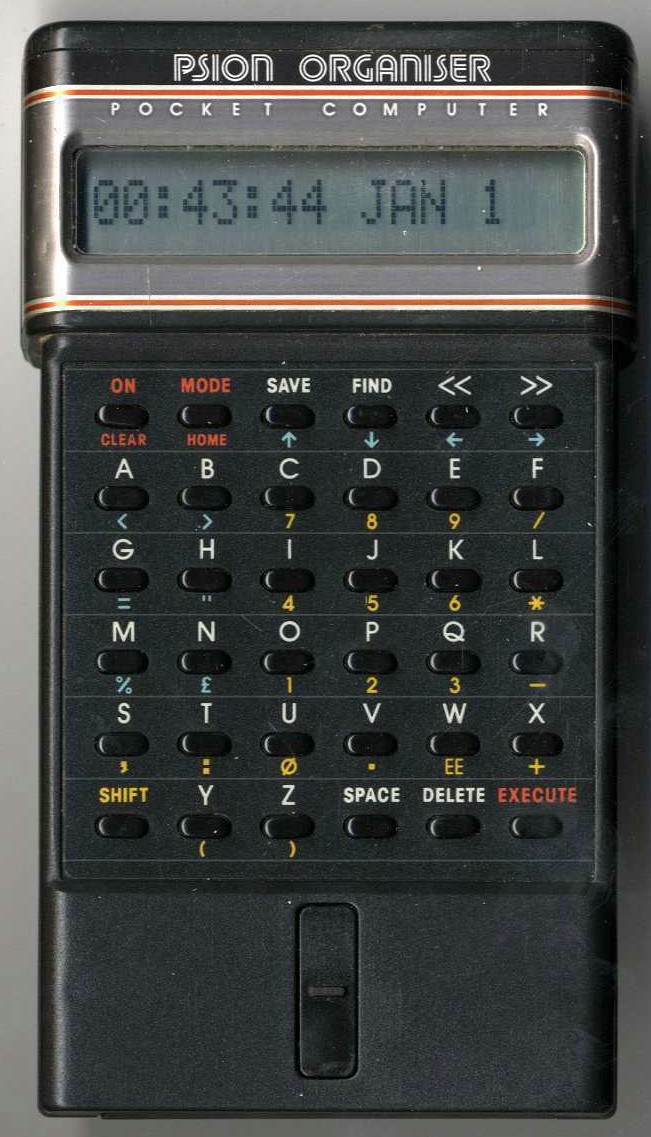
The Psion Organiser was the brand name of a range of pocket computer developed by the British company Psion in the 1980s. The Organiser I (launched in 1984) and Organiser II (launched in 1986) had a characteristic hard plastic sliding cover protecting a 6x6 keyboard with letters arranged alphabetically. The Organiser II can be considered the first usable PDA in that it combined an electronic diary and searchable address database in a small, portable device. Production of consumer hand-held devices by Psion has now ceased; the company, after corporate changes, now concentrates on hardware and software for industrial and commercial data collection applications. On an episode of The Gadget Show (first aired on 30 March 2009), the Psion was pitted against the BlackBerry for a place on the shows Hall of Fame.[1] Whilst the Psion was highly praised as a device that pioneered portable computing, the accolade was ultimately given (by host Jon Bentley) to the BlackBerry.
Psion Organiser II
Psion Organiser II
📅 1986
Ficha técnica

Historia

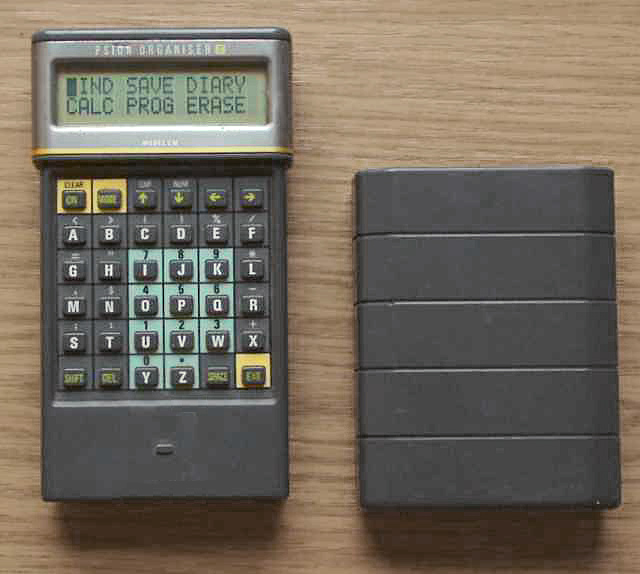
Primera PDA de la historia.

Características

Lenguajes  	OPL
Teclado  	36-key Alphabetic
CPU  	HD6303X
Velocidad  	0.92MHz
RAM  	CM: 8 KB, XP: 16 KB, LA/LZ: 32 KB, LZ64: 64 KB
ROM  	CM/XP/LA: 32 KB, LZ/LZ64: 64 KB
Modos de Texto  	CM/XP/LA: 2 lines x 16 chars, LZ/LZ64: 4 lines x 20 chars
Colores  	B/W LCD
Sonido  	Buzzer
Tamaño/Peso  	142 (D) x 78 (W) x 29 (H) mm / 250g
Puertos de entrada/salida  	Proprietary
Fuente de alimentación  	9v/.1A Pilas or mains
Perifericos  	Proprietary Memoria expansions
Precio  	CM: £79.00 - LZ64: £179.00
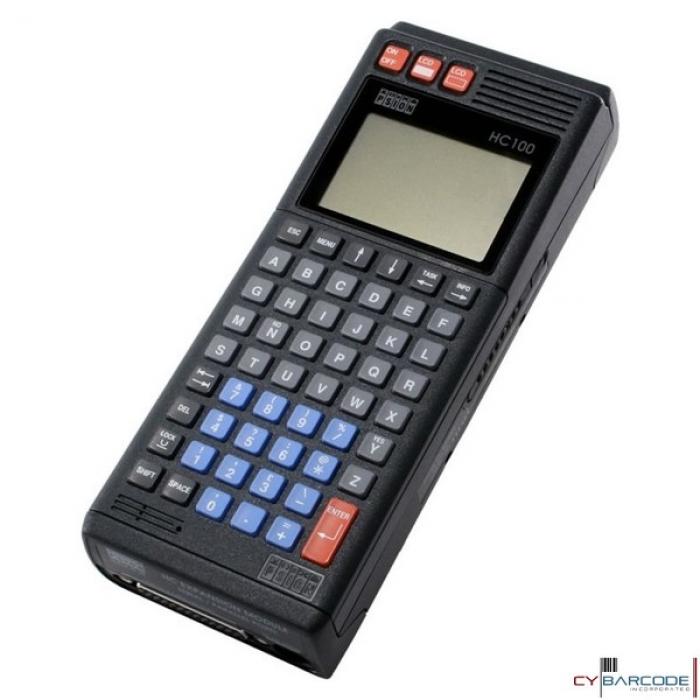
Psion HC 100
Psion HC 100
📅 1989
Ficha técnica

Historia

With the release of its 16-bit architecture, Psions consumer and industrial computer designs diverged. The Psion HC was the industrial counterpart of the consumer-oriented Series 3. The HC retained the vertical design and alphabetic keyboard of the Organiser II computers, while using the same 3.84MHz NEC V30H processor as the Series 3. The screen resolution was 160x80 pixels. Three models were available: the HC100, HC110 and HC120, with 128KB, 256KB or 512KB of RAM.The HC was designed to be used with bespoke software packages, and lacked many of the user-friendly elements of the Series 3. It replaced the Series 3s built-in graphical software with a simple command line, and thus lacked an editor for the OPL language. It could run OPL programs, but not those which used GUI elements like windows, dialogs and menus. The basic graphical facilities were offered, but this incompatibility with the Series 3, and the industrial environment that HCs were sold into, meant that little or no entertainment software was written for them.

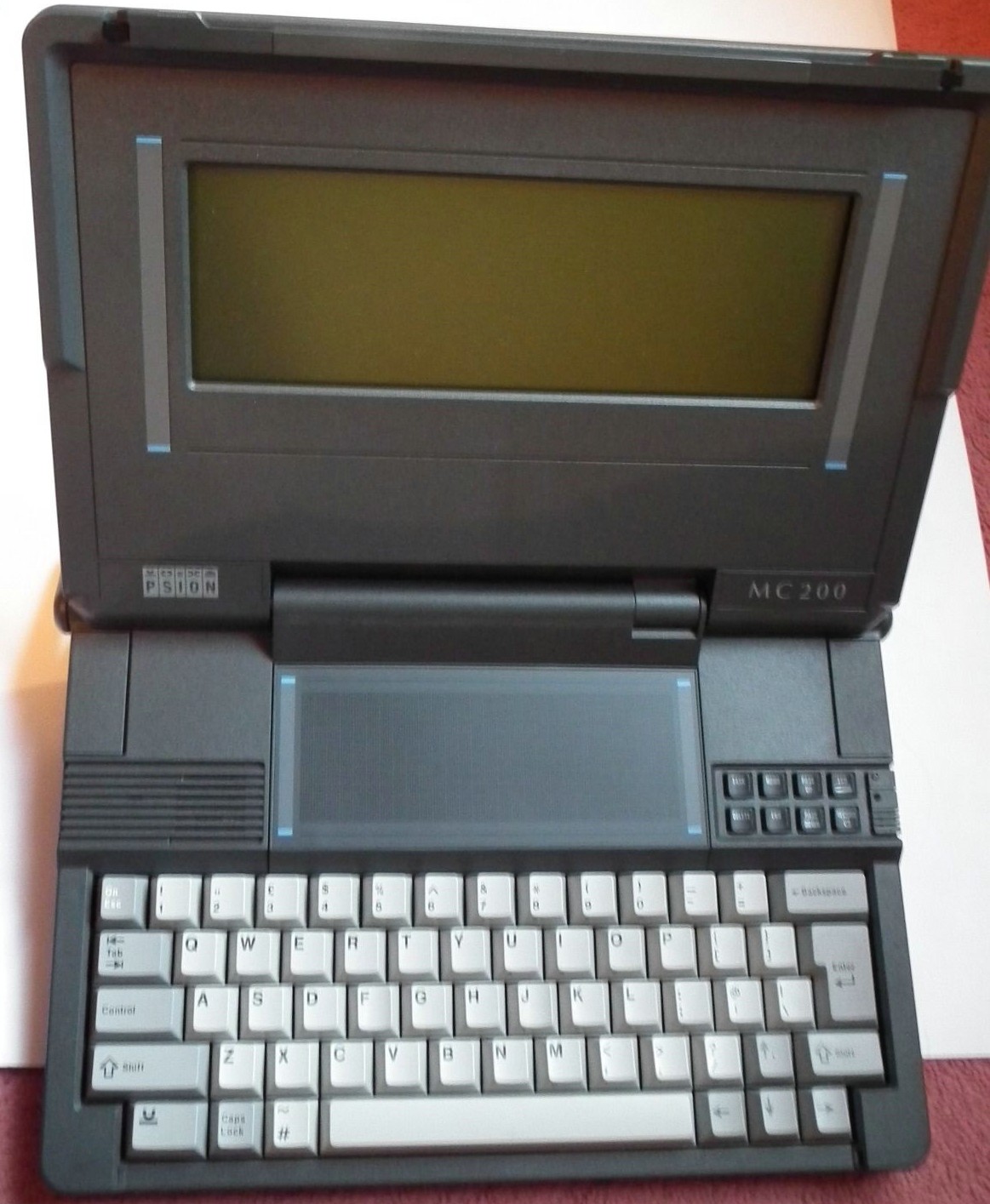
Psion MC200
Psion MC200
📅 1989
Ficha técnica

Características

Lenguajes  	None
Teclado  	Full-stroke 63 key + touch pad - MC-600: 10 function Teclas
CPU  	80c86
Velocidad  	7.68 MHz
RAM  	MC-200: 128 up to 256 KB
MC-400: 640 KB up to 1 MB
MC-600 768 KB up to 1 MB
ROM  	256 KB. Hold management software - MC-600 MS-DOS 3.2
Modo gráfico  	640 x 400
Colores  	monochrome LC-200 Blue/White, LC-400/600 Black/White
Sonido  	Internal speaker and microphone
Tamaño/Peso  	31.4 (W) x 27.7 (D) x 4.9 (H) cm / 2.2 kg
Puertos de entrada/salida  	Serial connector
OS  	EPOC
Fuente de alimentación  	8 Double AA Bateries or 12V external Fuente de alimentación unit - 30 to 75 hours autonomy
Perifericos  	MC-600: external disk drive unit
Precio  	MC-200: £595 - MC-400: £695
Psion Siena
Psion Siena
📅 1998
Ficha técnica

Historia

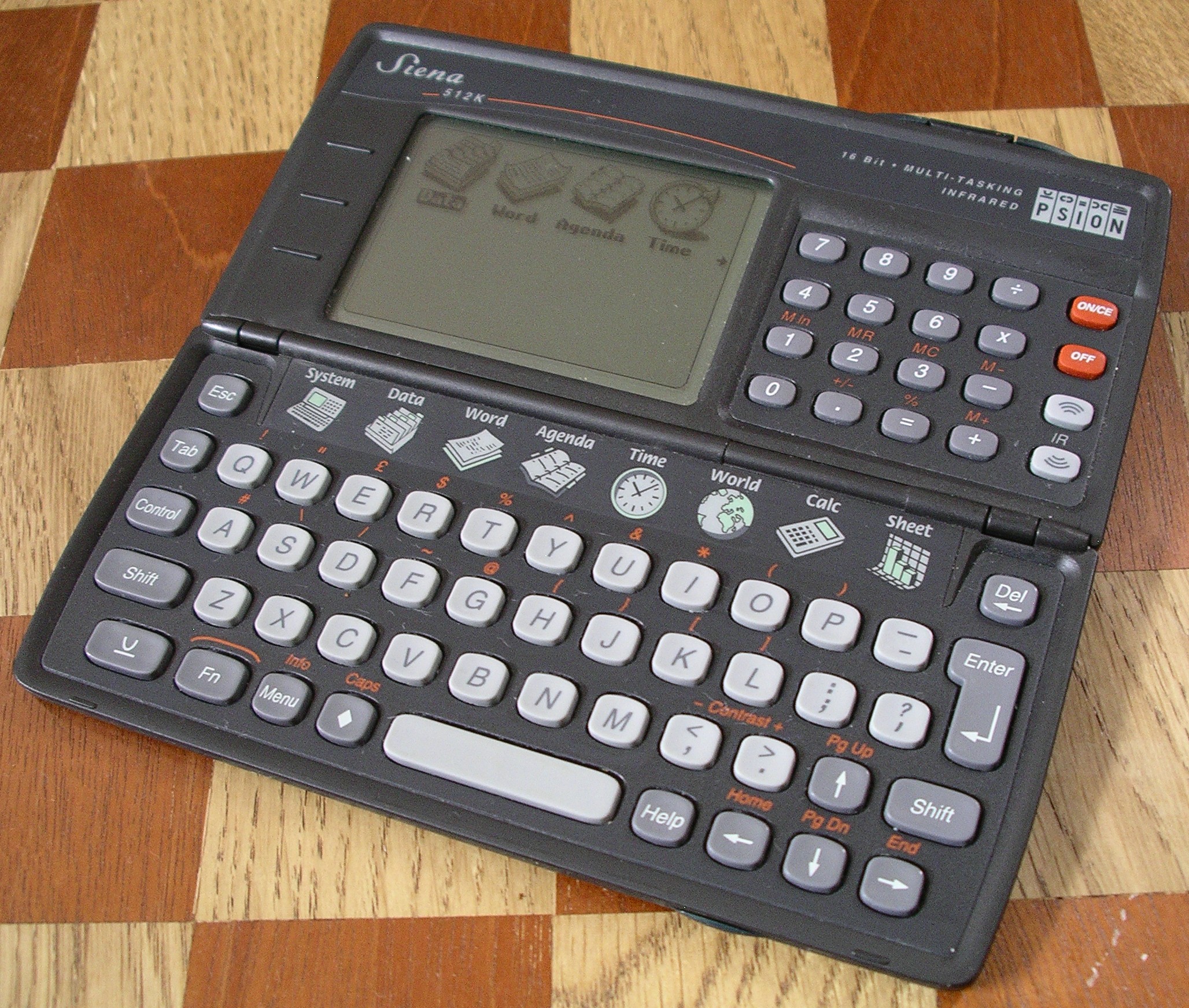
Le Siena est un Series 3c miniaturisé, sans port pour disquette extérieure, avec un écran de 240 x 160 pixels et un niveau de gris

Página 1 de 1