Inicio › Ordenadores › Toshiba

Toshiba
Máquinas (1–22 de 22)
Toshiba Pasopia
Ficha técnica
Historia
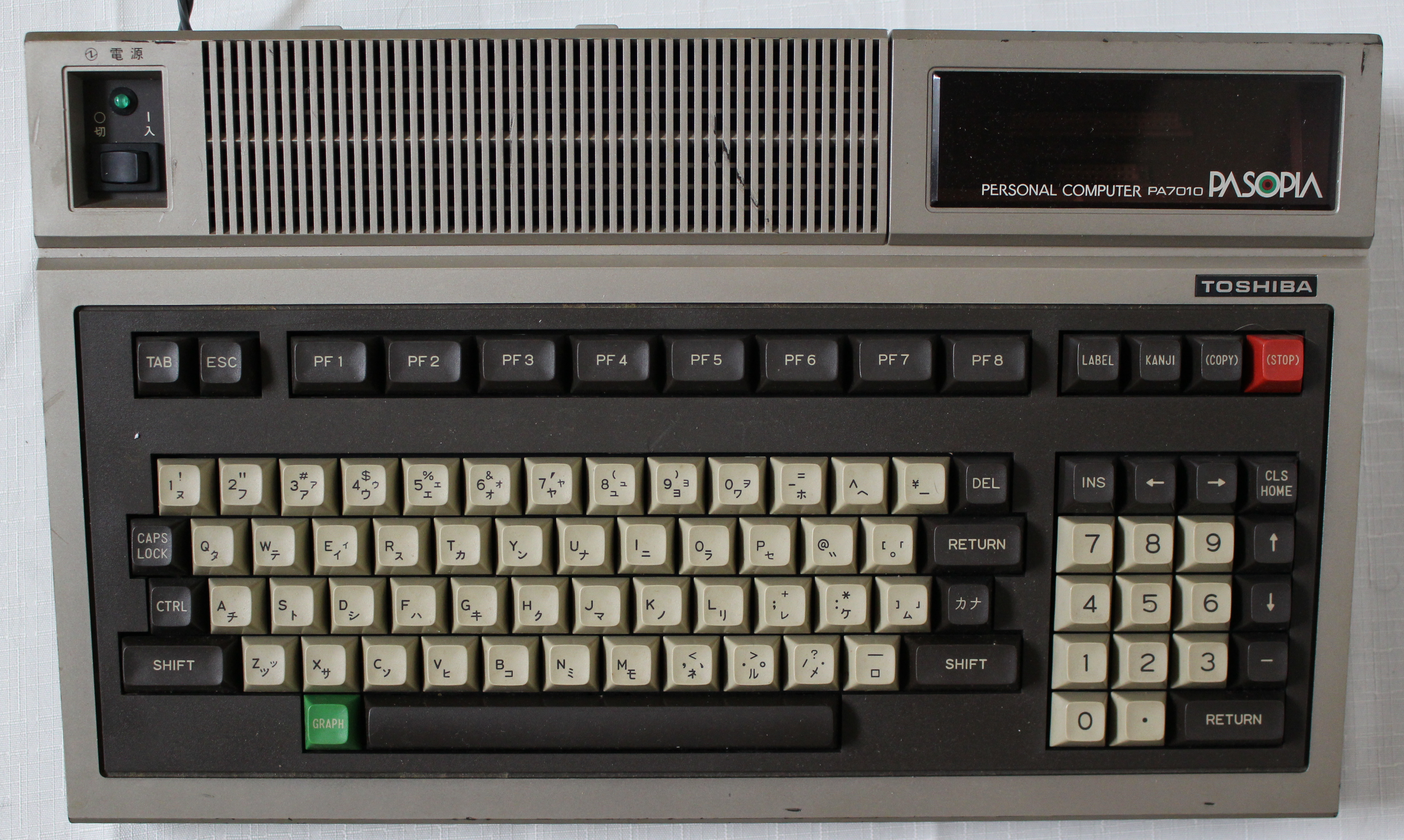
Bajo el nombre Pasopia, Toshiba fabricó varios ordenadores personales de 8 bits, un pocket PC, algunos MSX y otros compatibles PC PASOPIA PA7010-PA7012 1982/01 Z80A monocromo PASOPIA MINI 1982 Z80A pocket PC PASOPIA 16 PA7020 1983/04 Z80A PASOPIA 7 PA7007 1983/08 Z80A PASOPIA 5 PA7005 1984/05 Z80A menores prestaciones que el 7 PASOPIA 700 Z80A menores prestaciones que el 7 PASOPIA 1600 PA7030A-B-C 1984/05 8088
Características
Lenguajes  	Model PA7010 : T-BASIC
Model PA7012 : OA-BASIC
Teclado  	Full-stroke Teclado, JIS standard, 90 Teclas, separated numeric keypad, 8 function Teclas (16 Funciones)
CPU  	Z80A
Velocidad  	4 Mhz
RAM  	64 kb
VRAM  	16 kb
ROM  	32 kb
Modos de Texto  	80 x 20, 80 x 25, 36 x 24, 36 x 19
Modo gráfico  	160 x 100, 640 x 200
Colores  	8 (black, blue, red, purple, green, cyan, yellow and white)
Sonido  	3 octaves (speaker built-in)
Tamaño/Peso  	420 x 253 x 99.5 mm
Puertos de entrada/salida  	Video out, Tape interface (1600 baud), RS232c, Parallel connector, Expansion bus
Fuente de alimentación  	AC100V +- 10%, 50 / 60Hz
Perifericos  	Disk-drives, RAM expansions, printers
Precio  	163 000 yens (September 81, Japan)
Curiosidades
El primer ordenador personal de Toshiba, muy potente para su época.
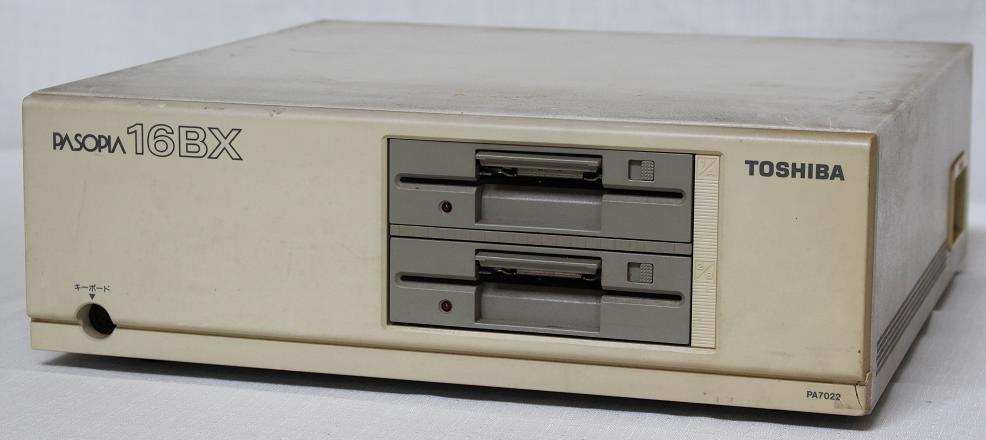
Toshiba Pasopia 16
Ficha técnica
Historia
Compatible IBM PC
Características
Lenguajes  	GW Basic
Teclado  	103 key full-stroke Teclado (QWERTY/AZERTY)
CPU  	Intel 8088
Velocidad  	4.77 MHz
Co-procesador  	Optional 8087 arithmetic processor
RAM  	192 KB (up to 256 KB onboard)
ROM  	4 KB
Modos de Texto  	40 x 25 / 80 x 25
Modo gráfico  	320x200, 640x200, 540x400, 640x500
Colores  	8
Puertos de entrada/salida  	7 x 8-bit Slots de expansión, Centronics/Parallel port, RS232c port (from 300 to 9600 bauds), RGB output (SCART for PAP model)
Almacenamiento interno  	One or two 5.25 disk-drives (720 KB)
Optional 10 MB hard-disk
OS  	MS-DOS, CP/M 86 in option
Fuente de alimentación  	Built-in PSU
Perifericos  	Additional disk-drive, 10 MB hard-disk
Precio  	1 disk-drive model : 22119 FF (France, Dec. 83)
Monochrome & 1 disk-drive model : 2824  (France, april 85)
3372  (France, 84)
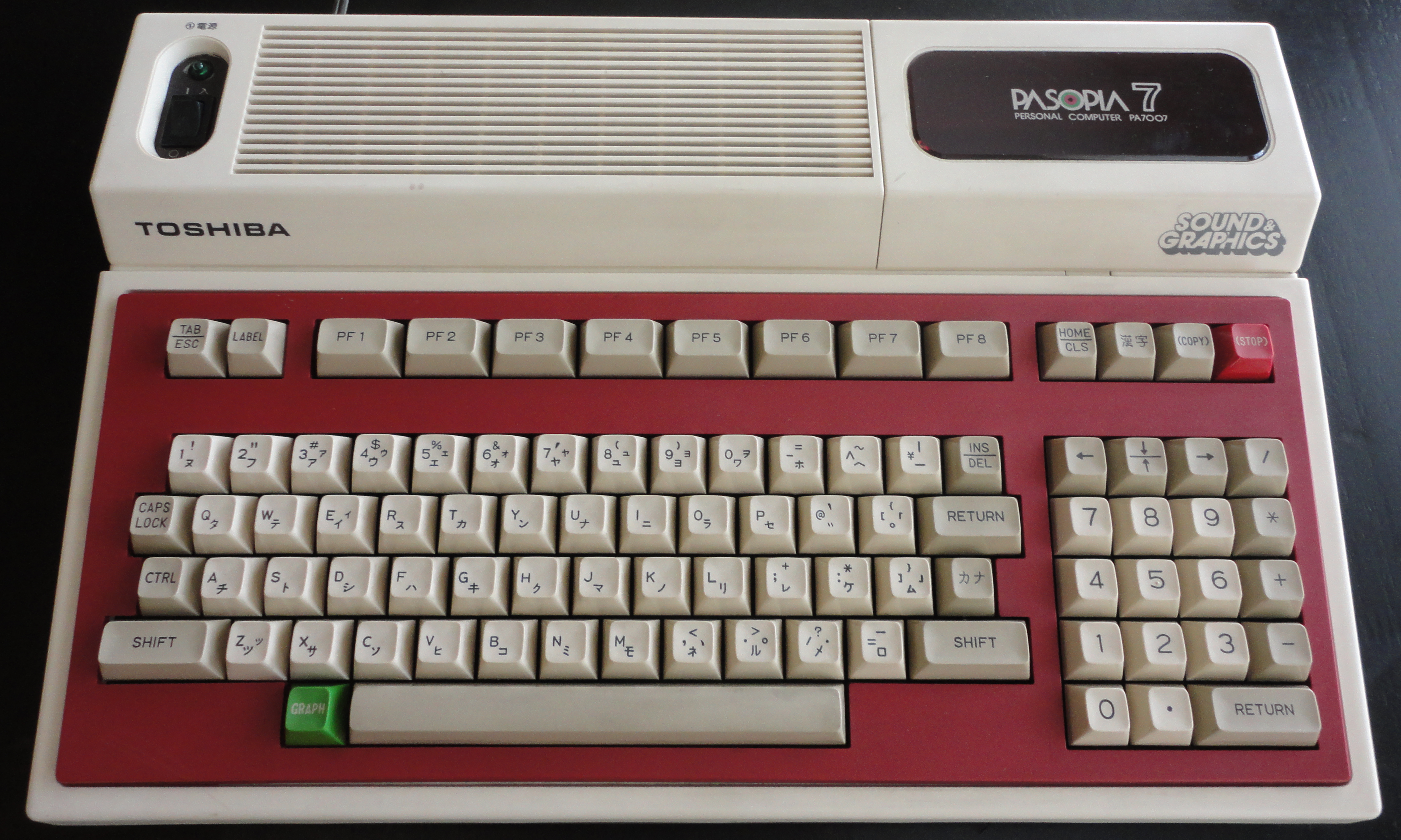
Toshiba Pasopia 7
Ficha técnica
Historia
Sucesor del Toshiba Pasopia. Lo interesante de este modelo es que dispone de carcasas de colores intercambiables (azul, rojo, negro).
Características
Lenguajes  	T-Basic 7
Teclado  	Full-stroke Teclado, JIS standard, separated numeric keypad and function Teclas
CPU  	Zilog Z80A
Velocidad  	4 Mhz
RAM  	64 kb
VRAM  	56 kb
ROM  	48 kb (32 kb Basic + 16 kb Bios)
Modos de Texto  	40 x 25 / 80 x 25
Modo gráfico  	320 x 200 / 640 x 200
Colores  	27
Sonido  	2 voices, 6 octaves
OS  	CP/M optional
Perifericos  	5 disk-drive, Chinese characters ROM, RS232 Interface, Memoria upgrade, printer
Precio  	119 800 yens (1983, Japan)
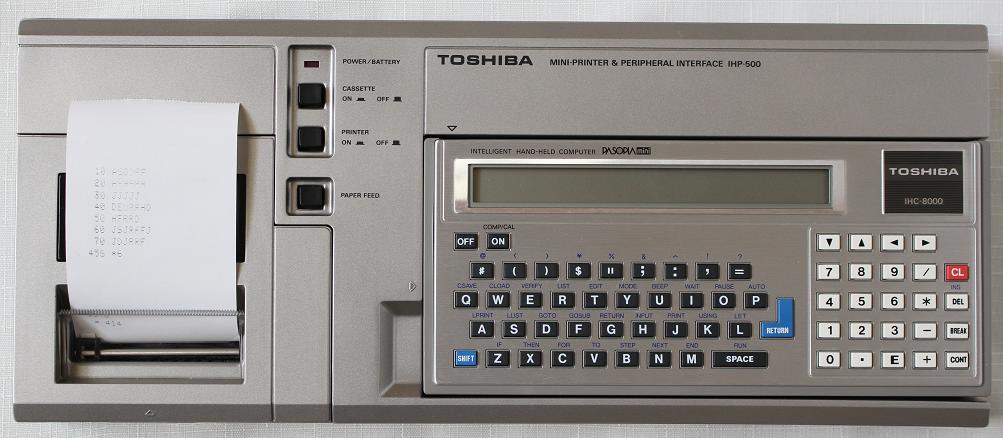
Toshiba Pasopia Mini IHC-8000
Ficha técnica
Historia
Toshiba IHC-8000 un pocket pc con bastantes posibilidades de expansión
Características
RAM (total):
4 / 16 Kb (0 or 1 Memoria card of 12 Kb)
RAM available:
3.068 / 15.356 bytes
ROM:
20 Kb ?
CPU:
8 bits CMOS
Text screen:
1 line of 24 characters
Graphic screen:
No
Sonido:
Yes (one shoot or continuous)
Dimensiones:
195 x 88 x 25 mm
Peso:
365 g. with Pilas
1983
Alimentacion:
3 AA alkaline Pilas
Extensions
Memoria: IHM-200  12 Kb
Printer: IHP-500  Thermal Tecnología
Almacenamiento: IHP-500  External tape interface
I/O: IHV-500  Video interface
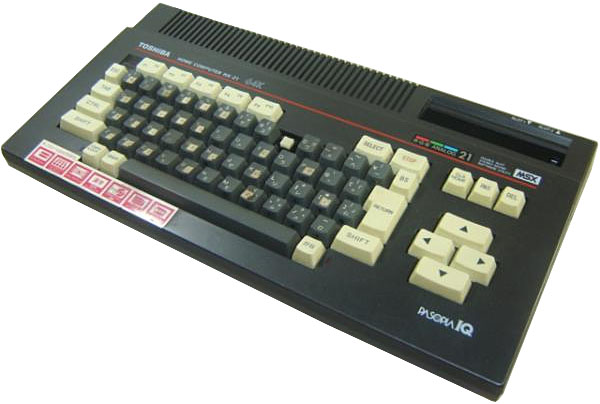
Toshiba HX20 Pasopia IQ
Ficha técnica
Historia
Alguos modelos de MSX tenían etiquetado Pasopia IQ en la carcasa.
Características
Lenguajes  	Microsoft Extended Basic (MSX Basic V1.0)
Teclado  	QWERTY mechanical Teclado with 4 function Teclas, and arrow Teclas.
CPU  	Z80A
Velocidad  	3,6 Mhz
Co-procesador  	Video Pantalla Processor TMS 9929A
RAM  	64 kb
VRAM  	16 kb
ROM  	32 kb
Modos de Texto  	Mode 0 : 40 x 24
Mode 1 : 32 x 24
Modo gráfico  	Mode 2 : 256 x 192 with 16 Colores (Hires mode)
Mode 3 : 64 x 48 with 16 Colores (Multi colour mode)
32 sprites
Colores  	16
Sonido  	General Instruments AY-3-8910 Programmable Sonido Generator
3 channels, 8 octaves
Tamaño/Peso  	370 x 245 x 60 mm / 2,8 kg
Puertos de entrada/salida  	2 joystick sockets, 2 cardridge slots, Tape-recorder connector (1200/2400 bauds), Composite video output, Centronics interface, RF video output, Expansion bus, Stereo audio output
HX-21 : RGB analog video output
OS  	MSX DOS
Fuente de alimentación  	Fuente de alimentación built-in
Toshiba HX34 Pasopia
Ficha técnica
Historia
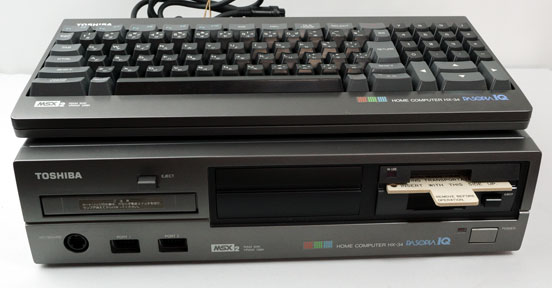
Un equipo MSX2 también apellidado Pasopia IQ
Toshiba T1200
Ficha técnica
Características
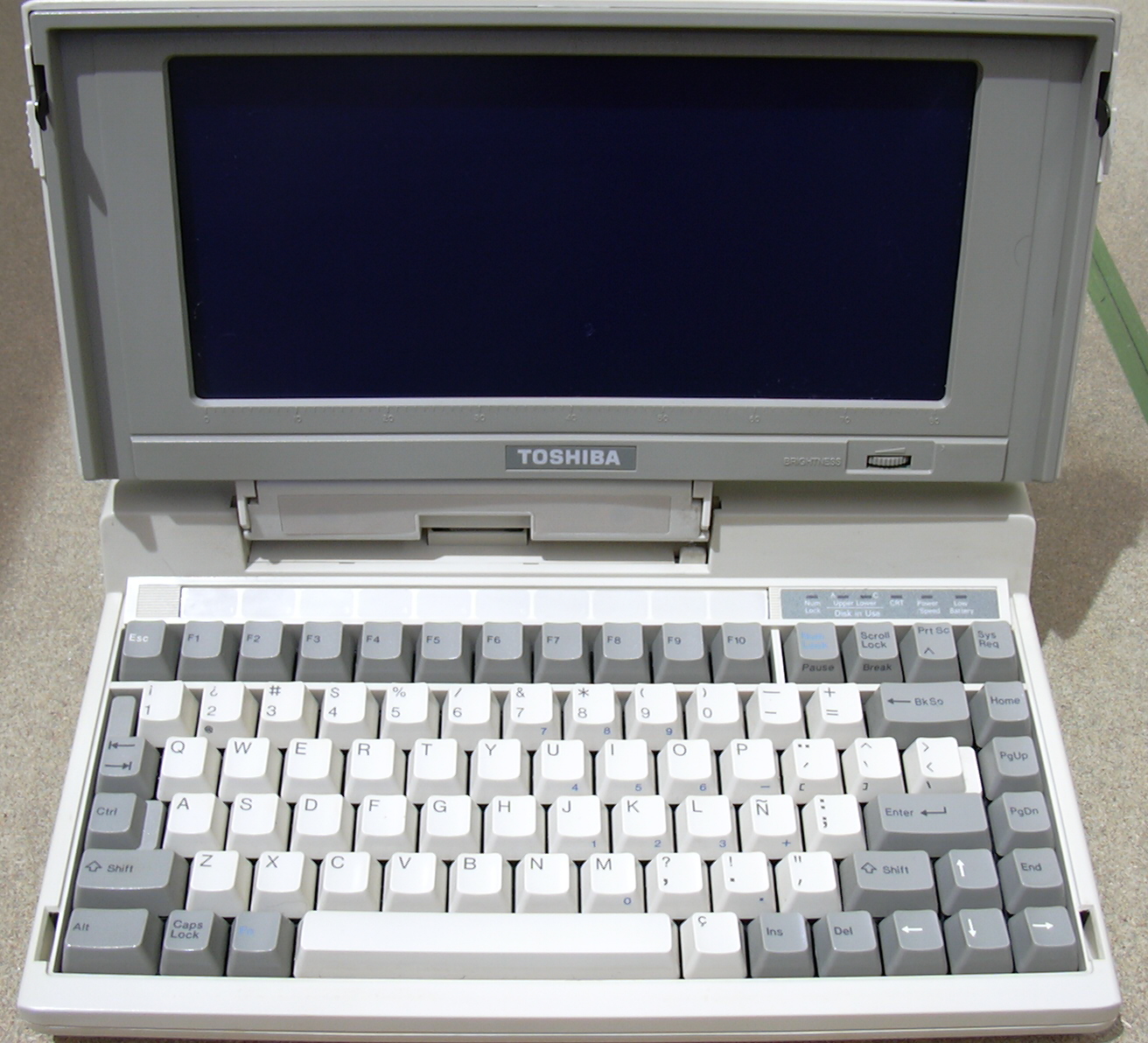
ORIGIN Japan - YEAR 1987 - END OF PRODUCTION 1992 - BUILT IN LANGUAGE None - KEYBOARD Full Stroke 82 Keys with Numeric Keypad Overlay - CPU Intel 80C86 - SPEED 9.54 MHz - RAM 1 MB - VRAM 256 KB - ROM 64KB (Holds Memory Test and BIOS) TEXT MODES 40 or 80 Columns x 25 Lines - GRAPHIC MODES 640 or 320 x 200 dots - COLORS Monochrome - 16 Grayscales (Blue and Green) - SOUND PC Speaker - SIZE / WEIGHT 12(W) x 12 (L) x 2.5 (H) Inches / 11lb (With HD) or 10lb (With 2 FDDs) - I/O PORTS 9 Pin RGBI, 9 Pin RS-232, Composite, Numeric Keypad, Centronics 25 Pin, External Floppy Drive, RJ-11 Phone Line Connector, HDD Power, 15V DC Laptop Power - BUILT IN MEDIA 1 or 2 720K 3 ½ Floppy Drives or 20 MB Hard Drive. - OS MS-DOS or PC-GEOS - POWER SUPPLY External 12v DC 2.2 amp power supply unit. - PRICE AU$7999 (1987) - AU$3995 (1991)
Toshiba T3200
Ficha técnica
Características
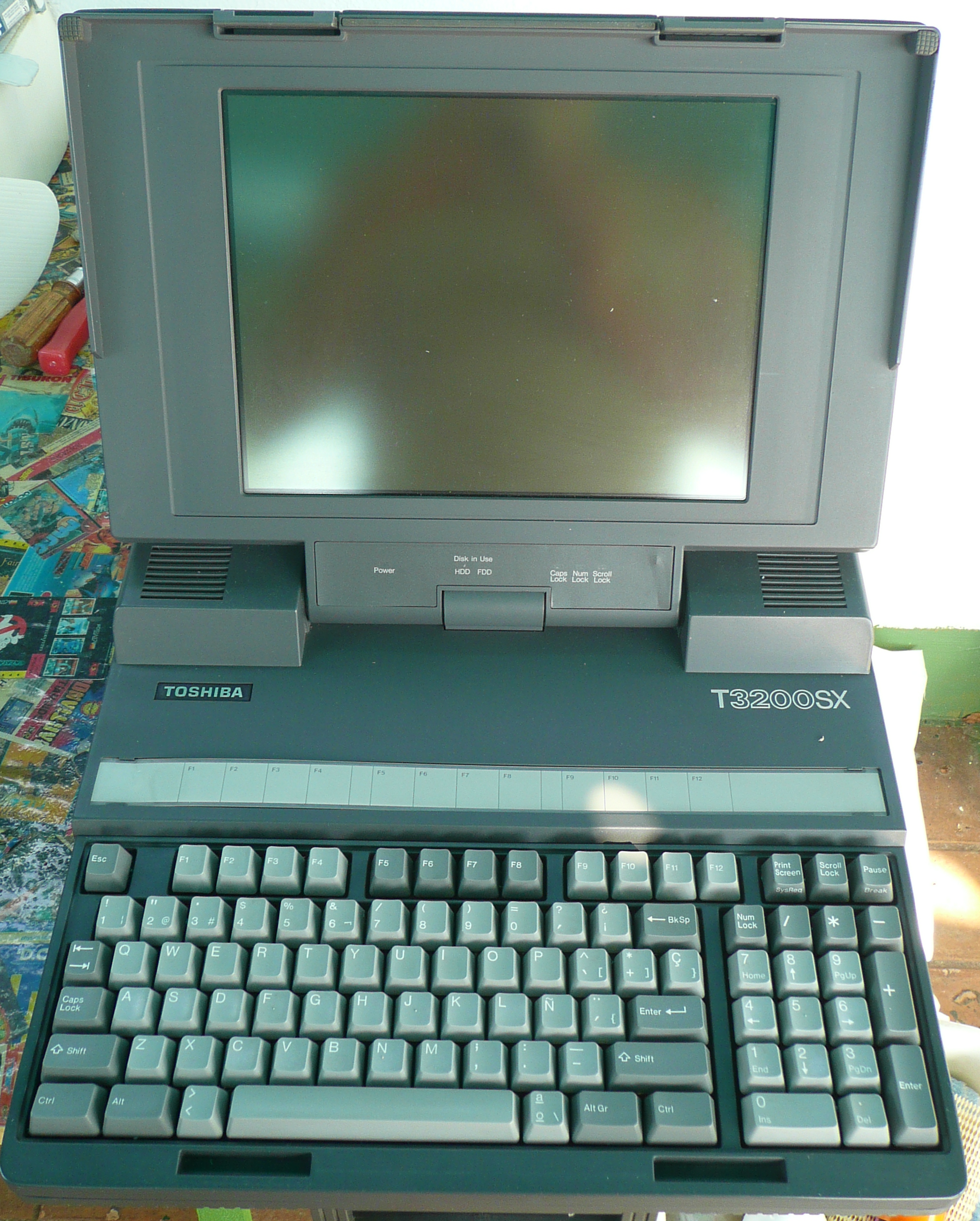
Processor Intel 80286 - 12 MHz. Optional 80287-8 math co-processor.
Memory 1024 KB standard. 640 KB may be used for MS-DOS and 384 KB as expanded memory (Lotus/ Intel/ Microsoft standard), as virtual disk, or as extended memory. Optional 3 MB memory expansion card for total RAM of 4 MB.
Diskette Drives One built-in 3.5 720 KB diskette drive. A second 5.25 360 KB diskette drive can be connected.
Hard Disk A fast built-in 3.5 40 MB (formatted capacity) hard disk.
Display High resolution EGA compatible gas plasma with variable contrast and variable brightness. Can display up to 4 gray scales. Display can also support CGA, Hercules, and 640 by 400 resolution. Maximum resolution supported is 720 by 400.
Keyboard
Sculptured 85 key with separate numeric keypad.
Expansion slots
One full size 16/8 bit slot and one half size 8 bit slot.
Interfaces
RS-232C serial
Centronics parallel
Colour display (RGB)
External diskette drive
External keyboard
Real Time Clock/ Calendar
Standard - backed up by long life lithium battery.
Operating System
MS-DOS 3.2
EMS
PC LAN support
BASIC version 3.2 option
Windows version 1.1 option
Measurements
370 x 395 x 99 mm (W x D x H)
Weight
8.5 kg
Power Supply
110/220 volts, 100W, switchable
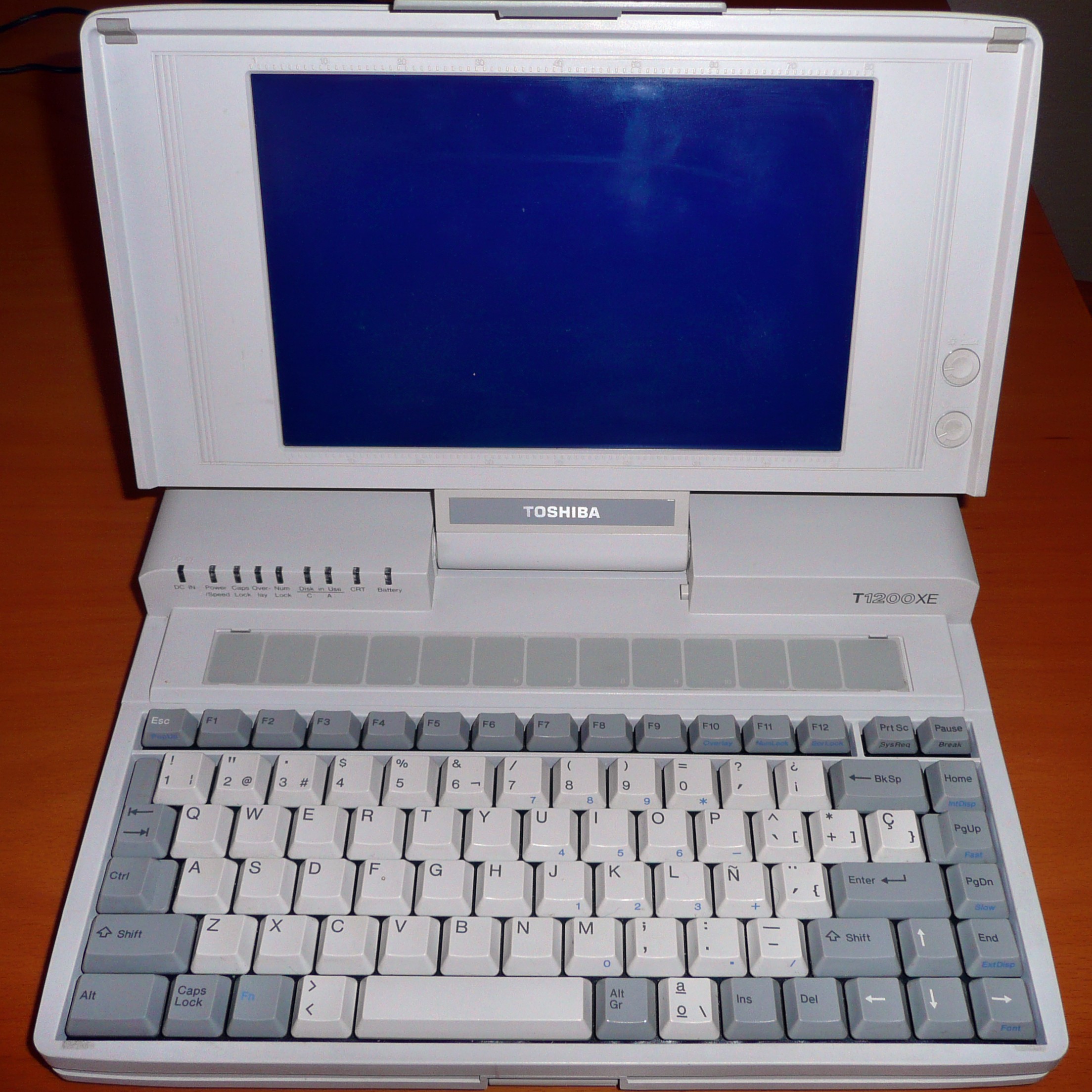
Toshiba T1000 XE
Ficha técnica
Características
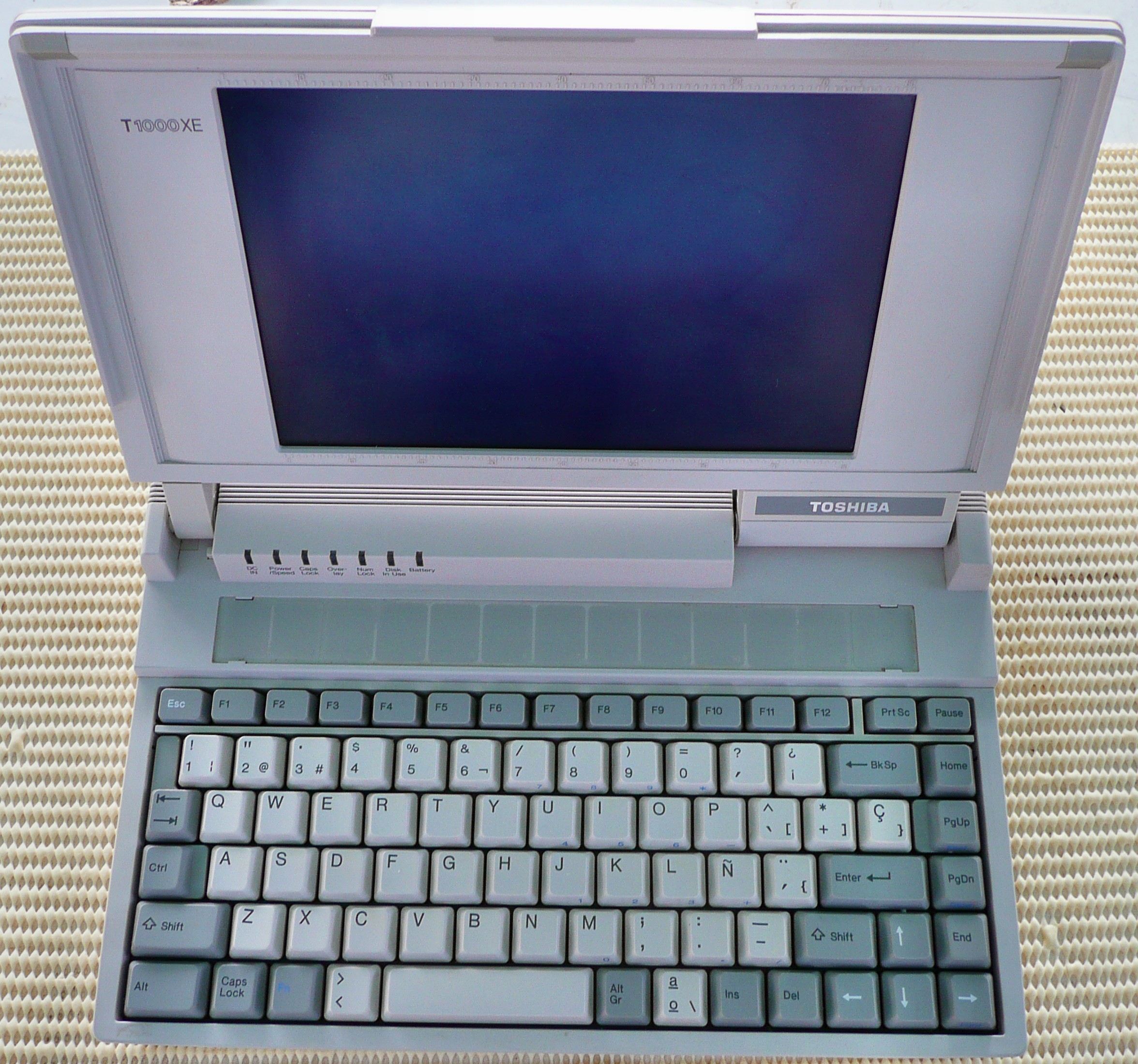
Processor 8OC88/4.77 MHz
Memory 512 KB
Floppy-disk drives 1 built-in 3.5 diskette drive, 720 KB
A second external 3.5 diskette drive,
720 KB or 5.25 floppy-disk drive,360 KB can be connected
Keyboard 82 keys, compatible with IBM PC
Display Supertwist display
80 characters x 25 lines
Graphics 640 x 200 dots or 320 x 200 dots
Swivel-mounted up to 180o
Interfaces
RS232C serial
Centronics parallel (printer)
Colour display (RGB) Composite video
External diskette drive
Operating system MS-DOS 2.11
Measurements 310 x 280 x 52 mm (W x D x H)
Weight 2.9 kg
Power supply Built-in rechargeable NiCad batteries
AC adapter/charger
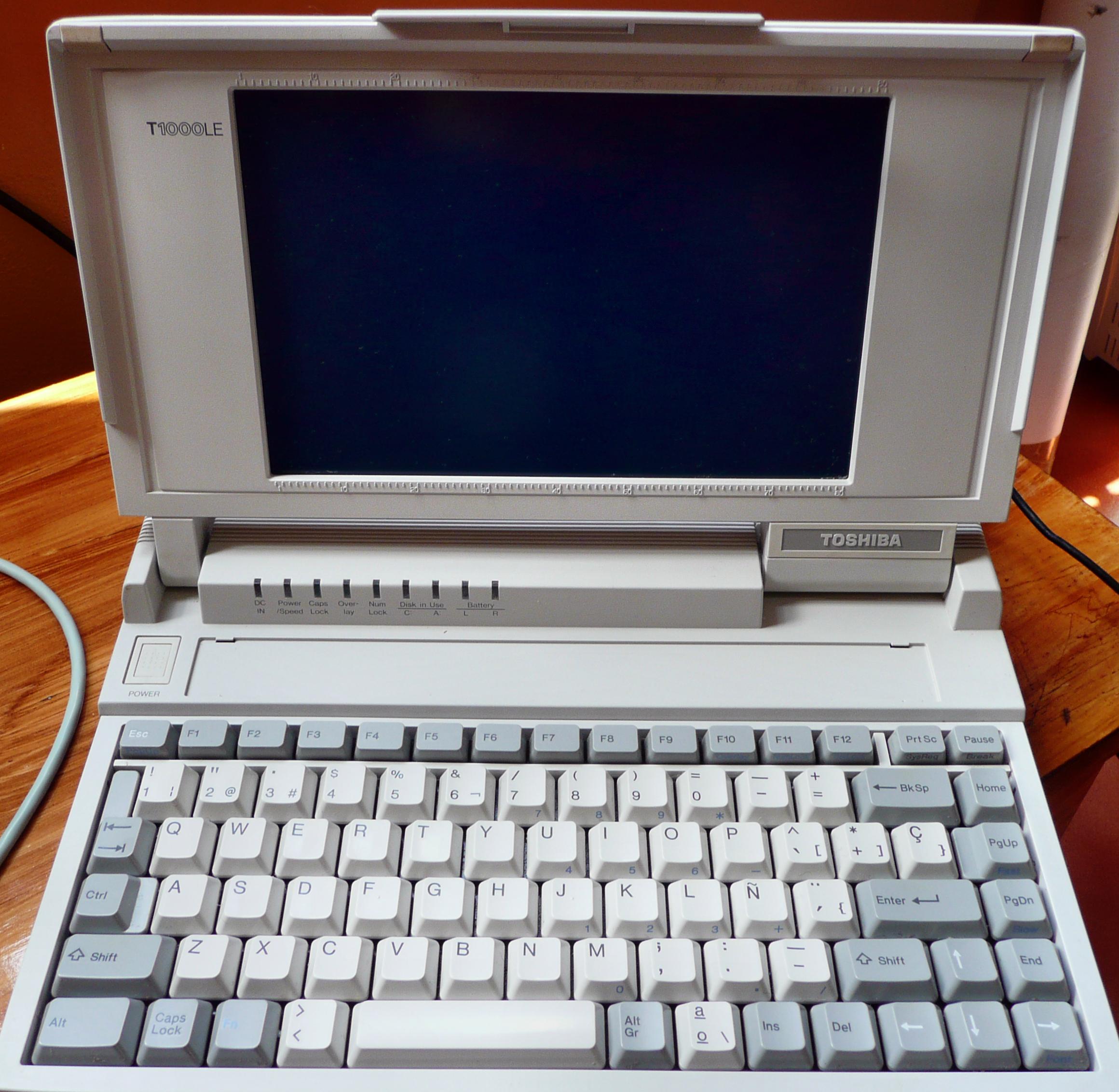
Toshiba T1000LE
Ficha técnica
Características
Processor 8OC88/4.77 MHz
Memory 512 KB
Floppy-disk drives 1 built-in 3.5 diskette drive, 720 KB
A second external 3.5 diskette drive,
720 KB or 5.25 floppy-disk drive,360 KB can be connected
Keyboard 82 keys, compatible with IBM PC
Display Supertwist display
80 characters x 25 lines
Graphics 640 x 200 dots or 320 x 200 dots
Swivel-mounted up to 180o
Interfaces
RS232C serial
Centronics parallel (printer)
Colour display (RGB) Composite video
External diskette drive
Operating system MS-DOS 2.11
Measurements 310 x 280 x 52 mm (W x D x H)
Weight 2.9 kg
Power supply Built-in rechargeable NiCad batteries
AC adapter/charger
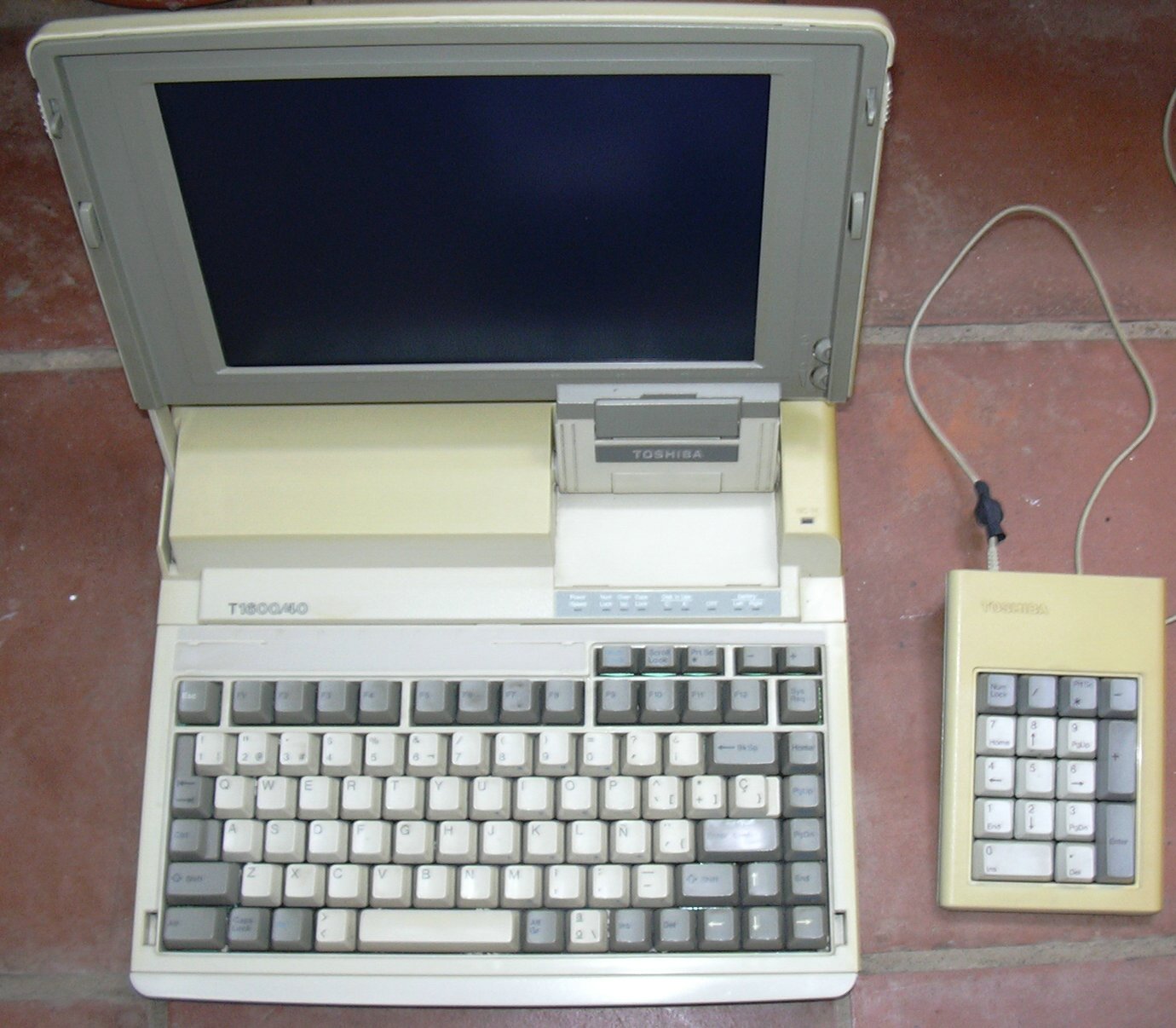
Toshiba T1600-40
Ficha técnica
Características
CPU 80286 - 12 Mhz - RAM 1Mb ROM
Operating System MS DOS 3.3 - Text (Cols x Rows) 80 x 25
Graphics LCD 640 x 480 - Sound Beeper
Storage memory Floppy 3.5, hd 20-40Mb - Serial port 2 Parallel port 1
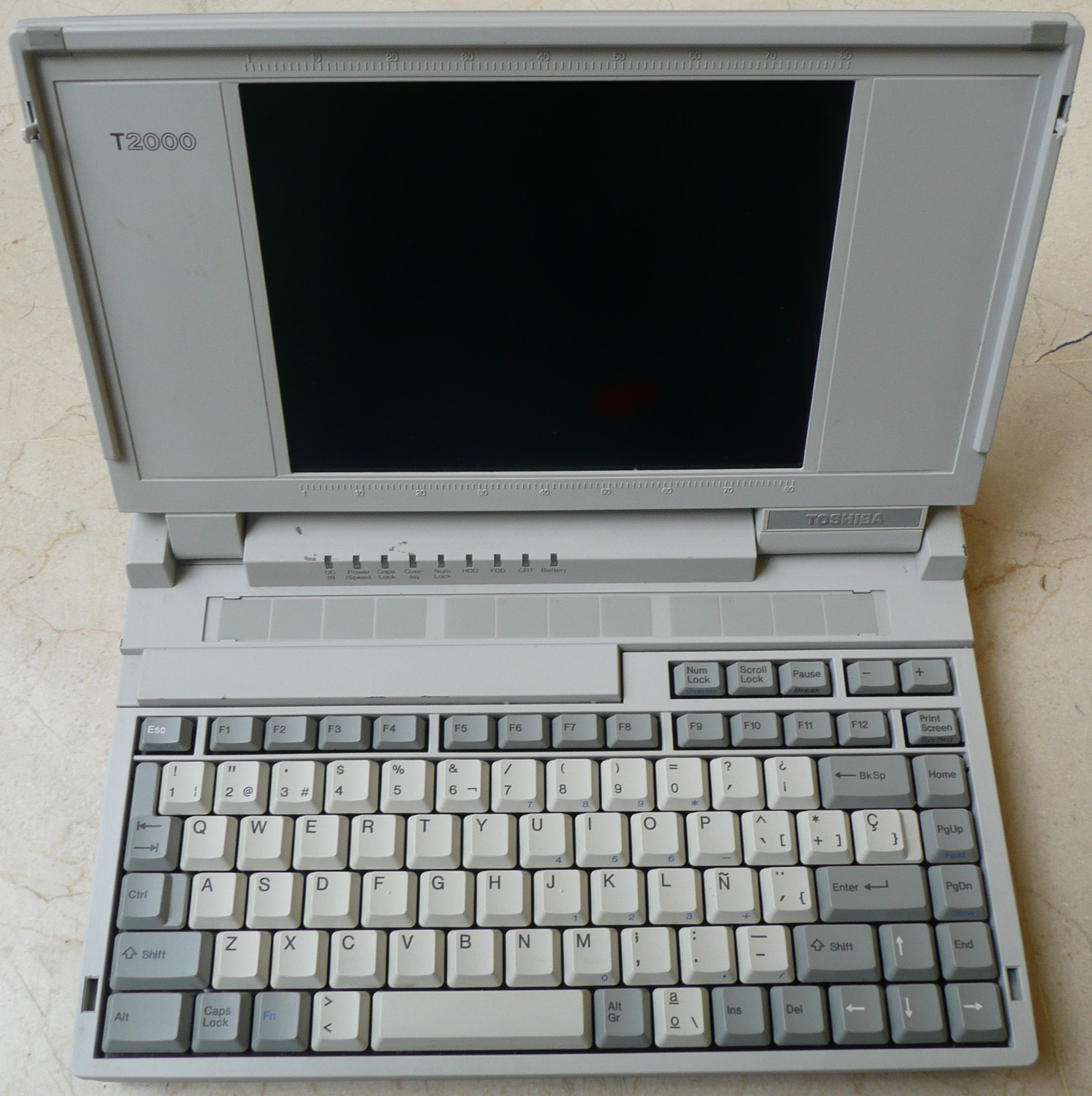
Toshiba T2000
Ficha técnica
Características
Processor: Intel 80C286 12/6 MHz clock speed - Reset switch AutoResume mode - Socket for optional 80C287 numeric coprocessor Memory: Standard 1 MB RAM Expandable to 9 MB (1, 2, 4, or 8 MB cards) LIM EMS support (3.2 HW, 4.0 SW) XMS support with MS-DOS 4.0 Toshiba HardRAM Hard Disk: 40 or 20 MB 19 ms average access time Diskette Drive: Built-in 3.5 720 KB / 1.44 MB diskette drive Media type checking Display: Sidelit Supertwist LCD Black and white 640 x 480 dot resolution 16 grey scales Expansion: Internal communications slot Desk Station II (option) Dimensions: (W*D*H) 310 x 254 x 46 mm (12.2 x 10 x 1.8) Weight: 3.1 kg (6.8 lb) with battery Keyboard: 88 full-size sculptured keys familiar layout 12 function keys, 8 dedicated cursor keys integrated numeric keypad Interfaces: 25-pin bidirectional parallel/FDD port (Centronics compatible), 9-pin RS-232C serial port, 100-pin expansion connector for Desk Station II, 15-pin analogue VGA monitor port, Keypad port Power supply: Autosensing 100-240 V AC adapter for world-wide usage Graphics Adapter: VGA compatible 256 colours on external screen Operating System: MS-DOS 4.01 or MS-DOS 3.3 (option)
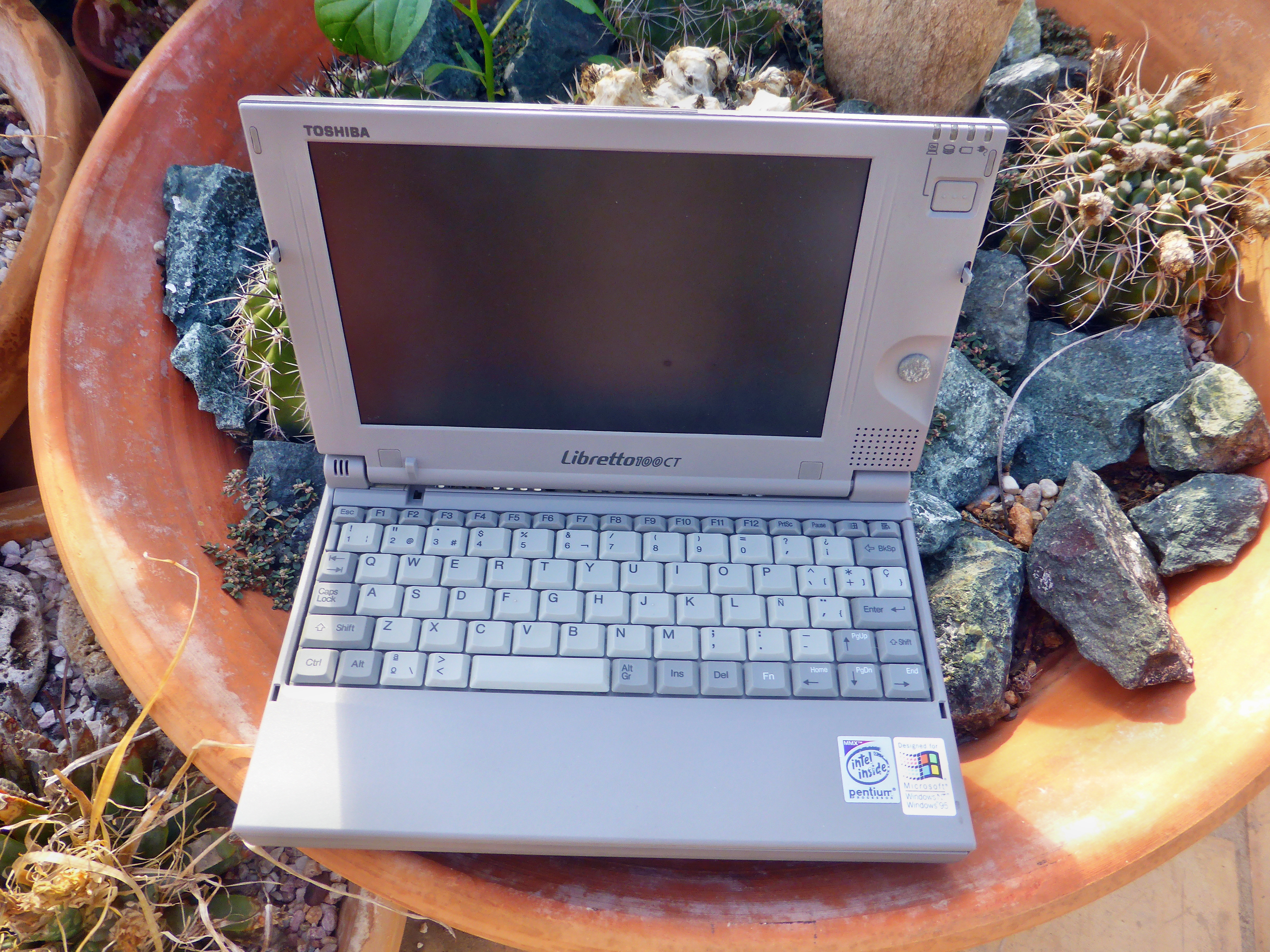
Toshiba Libretto 100CT
Ficha técnica
Historia
The Libretto is a line of subnotebook computers designed and produced by Toshiba. The line was distinguished by its combination of functionality and small size, squeezing a full Windows PC into a device the size of a paperback book. The first Libretto model, the Libretto 20, was released on April 17, 1996 (in Japan only), with a volume of 821 cm3 (50.1 cu in) and weighing just 840 g (30 oz), making it by far, the worlds smallest commercially available Windows PC at the time, and a trend the Libretto Range continued for many years. The original Libretto line was discontinued in Europe and the U.S. in 1999, but the production continued in Japan with the SS, FF and then the L series until 2002. The first L series Libretto (The L1) was released on 18 May 2001 (in Japan only) and the last (The L5) just 11 Months later on 24 April 2002. Production of all Librettos ceased from 2002 until the release of the Libretto U100 in 2005. It was a further five years before the Libretto returned again in 2010 with the limited-edition dual touch screen tablet W100 model.
Características
Intel Pentium 166 MHz MMX
32 MB RAM (64 MB max.)
2.1 GB hard disk, 7.1 TFT display
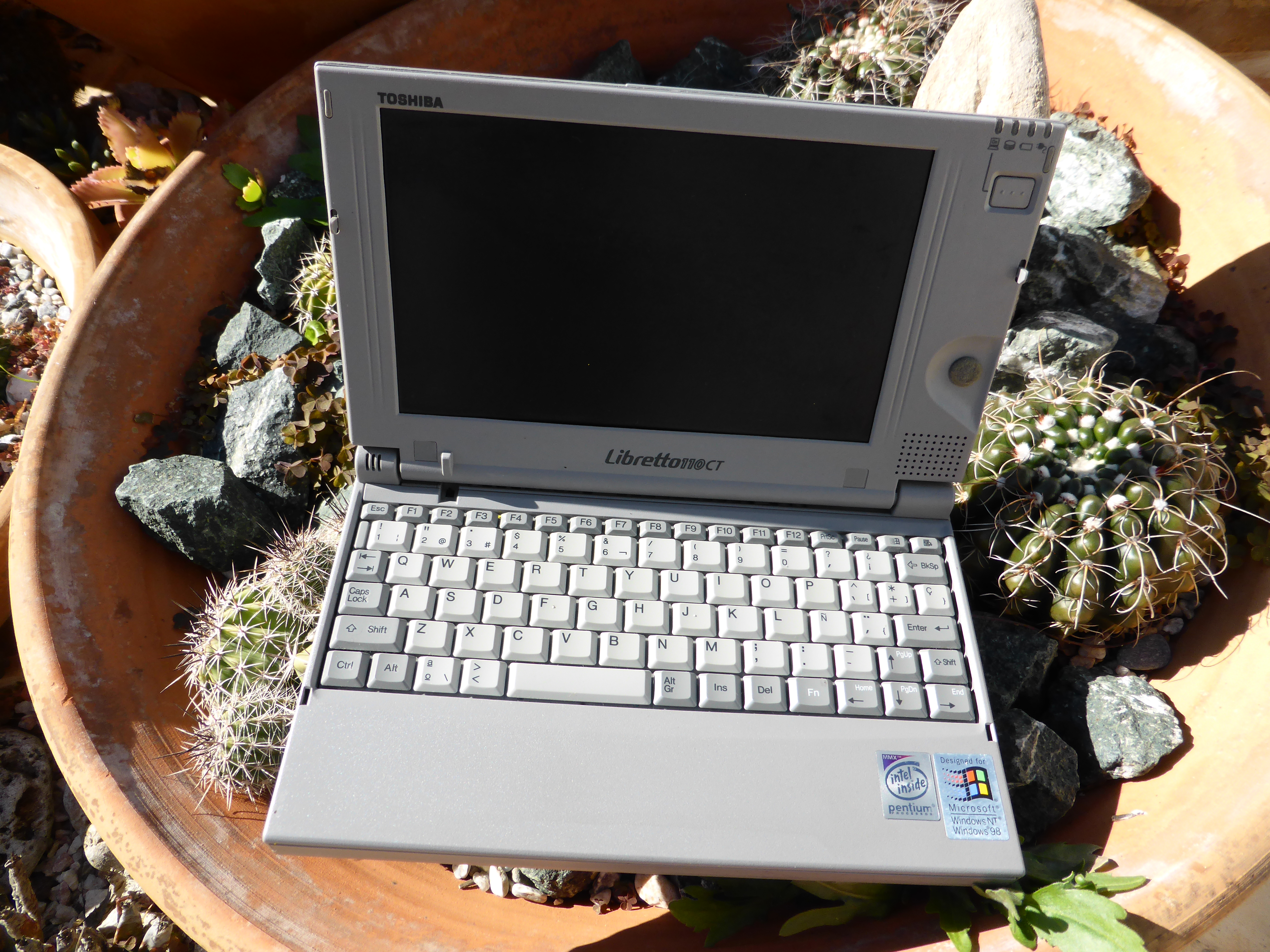
Toshiba Libretto 110CT
Ficha técnica
Características
Intel Pentium MMX mit 166 Mhz
32 MB RAM (erweiterbar auf 64 MB)
2x PCMCIA/Cardbus (32bit-fähig, also kein Problem USB und WLAN zu nutzen!)
7.1″ Display mit 800×480 Pixel
Infrarot und Yamaha-Soundkarte
2.1 GB Festplatte
Docking-Station mit VGA, RS232, LPT und PS/2
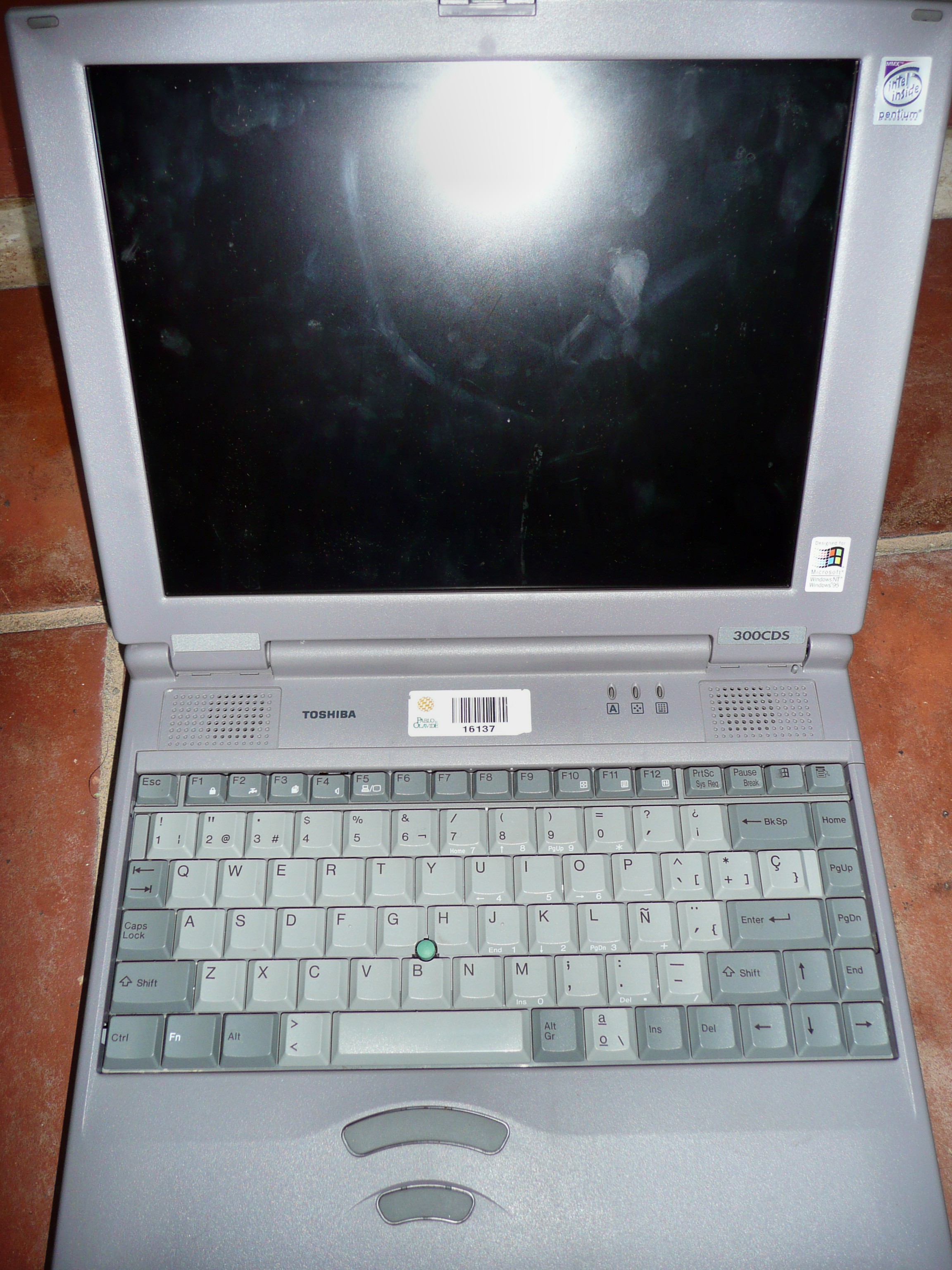
Toshiba Satellite 300CD
Ficha técnica
Características
Monitor: 12.1 inch DSTN mit einer Auflösung von 800 x 600 Intel Pentium 166 MMX 16-144 MB EDO RAM 256 KB 2nd Level Cache 2 MB Video-RAM 2,1 GB Festplatte Yamaha SAx-OLP (Kompatibel mit Soundblaster Pro und Microsoft Sound System) Mousepoint 16fach CDROM intern 3,5 Diskettenlaufwerk intern Lithium Ion Akku FIR USB
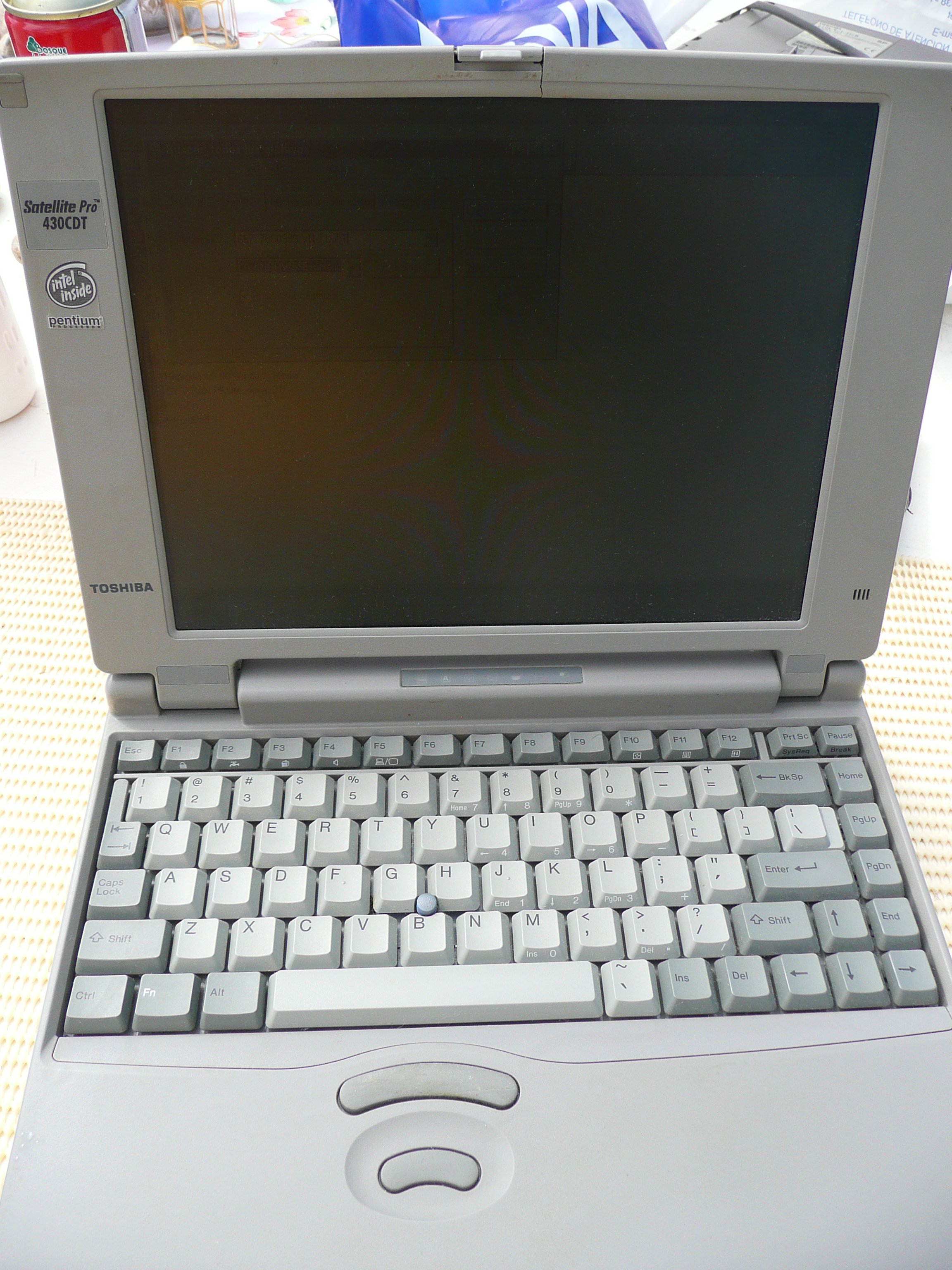
Toshiba Satellite Pro 430
Ficha técnica
Características
Manufacturer Toshiba
Type Notebook
Release date 1996
CPU 2.9 V Intel Pentium 120 MHz
Storage capacity 1350 million bytes hard disk
Memory 16 - 48 MB EDO RAM
Display SVGA, Colour 11.3 TFT LCD
800 x 600 resolution
Dimensions 299 x 235 x 57 mm
(W x D x H)
Weight 3.4 kg with integrated AC adaptor
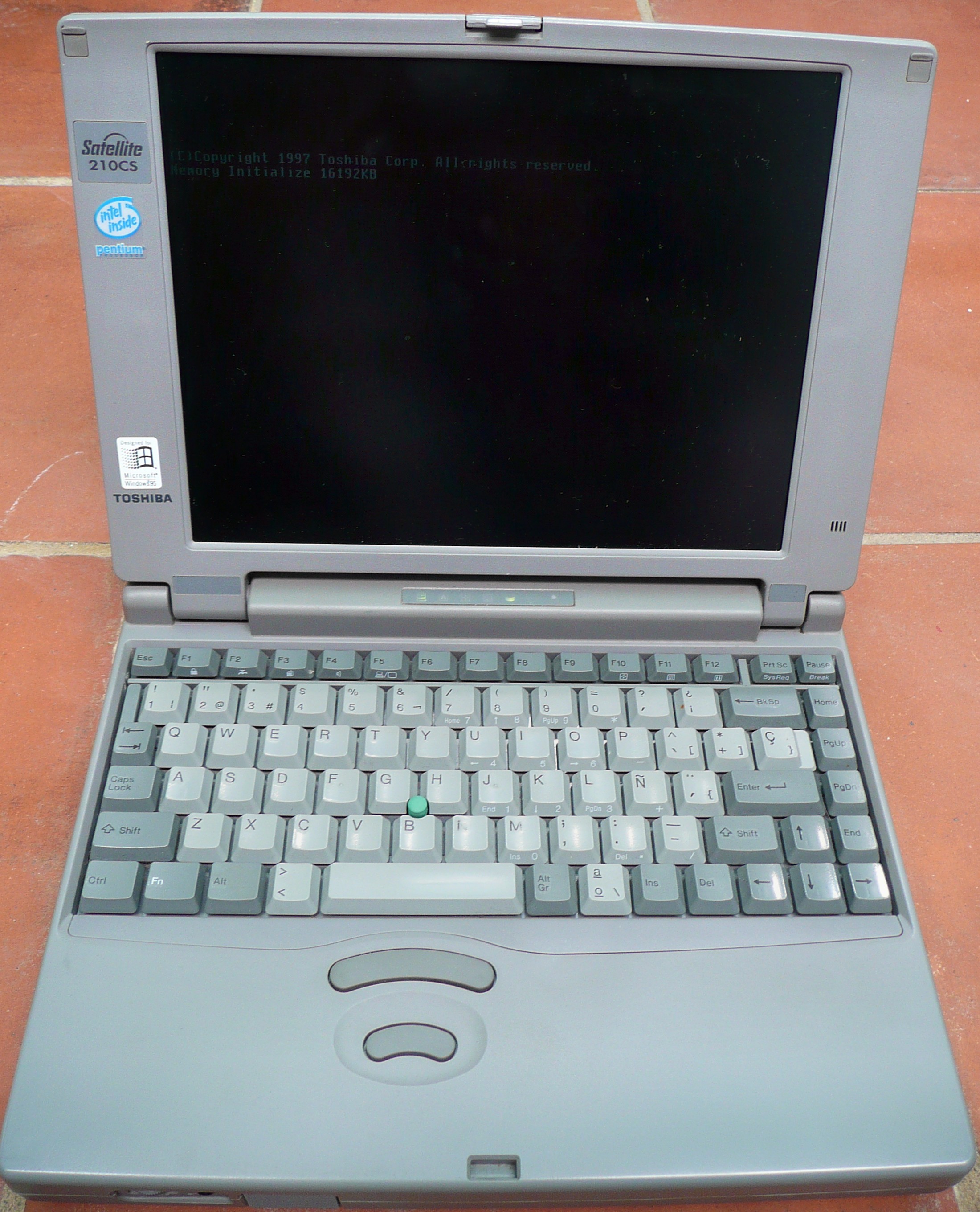
Toshiba Satellite 210CS
Ficha técnica
Características
The Satellite 210CS comes in these configurations with a fixed retail price range. This configuration Toshiba provided was complete with a Intel Pentium n/a n/a PC Card (PCMCIA) 4.3GB Ultra DMA, 2.5 Windows 95, expandable to 8MB (via SO-DIMM socket) S3 ViRGE MX (86C260) graphics controller 2 MB 2 MB

The Laptop memory add up to 40 or 48 MB, with standard memory of 8 or 16 MB (non-removable), memory installed n/a.
Curiosidades
año ¿?
Toshiba TGG-610 Gun
Página 1 de 1